Someday Uruguay: Could living in Montevideo offer the calm, connected life you want?
Moving to Uruguay from the US may offer a slower, more connected routine. Here is what living in Montevideo can feel like, cost, and require.

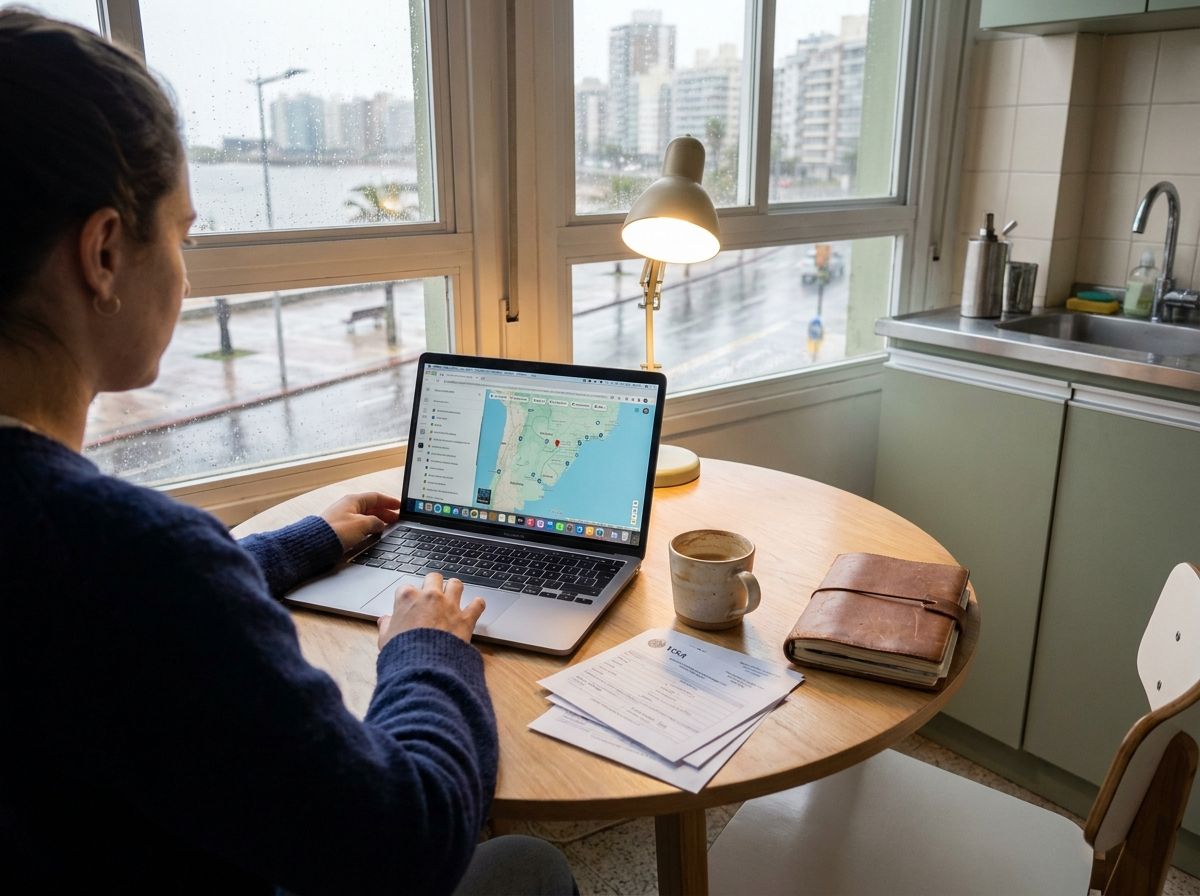
At 7:15 on a gray Tuesday, Maya Camp closes her laptop, leaves the coffee half-finished, and watches rain blur the kitchen window. She has spent another morning in traffic, answering messages from a home office that never quite feels like home. Moving to Uruguay from the US will not solve every problem, but living in Montevideo could give you a calmer daily rhythm, reliable city services, and a real neighborhood life without giving up urban connection.
That is the appeal of Uruguay. You can walk to the waterfront, meet a friend for coffee, ride buses instead of driving everywhere, and still have access to hospitals, schools, shops, and an international airport. The country is not a bargain in every category, and Montevideo is not a sleepy escape from adult responsibilities. It is a place to ask a more useful question: what would your ordinary Tuesday feel like there?
Maya has not booked a flight. She is still at the research stage, which is where many relocation plans stay for a while. Someday is not a failure. Sometimes it is the part where you stop treating a beautiful idea like a vacation brochure and start checking whether it fits your actual money, work, health needs, and patience for paperwork.
What living in Montevideo might give you
Montevideo sits along the Río de la Plata, a broad stretch of water that feels almost ocean-like from the city's rambla. The rambla is a long coastal road and walking route, and it is one of the city's most recognizable daily spaces. People walk, run, cycle, sit on the seawall, and drink mate while looking across the water.
That routine matters because it creates connection without requiring a major event. You do not need to plan a weekend excursion to get outside. You can take a short walk after lunch or watch the sunset after work, and if your current life has narrowed into errands, screens, and long drives, that small shift can feel surprisingly large.
Montevideo has several distinct areas, and your experience will depend heavily on where you live. Pocitos and Punta Carretas offer many apartments, shops, restaurants, and easy access to the rambla. Centro and Cordón have a more central, lived-in feel, with older buildings, universities, offices, and everyday services. Ciudad Vieja has historic streets and cultural spaces, but it can feel very different after office hours.
Your shortlist should include the exact neighborhood, not just the city name. Check these details before you fall in love with an apartment listing:
- How long does it take to reach a grocery store on foot?
- Is the route comfortable after dark?
- How noisy is the building during evenings and weekends?
- Can you reach your doctor, school, or workplace without a long cross-city trip?
- Does the apartment stay warm and dry during winter?
Uruguay's seasons are opposite those in the United States. January is summer, while July is winter. Montevideo's winter is usually mild compared with much of the US, but damp and chilly days can make an apartment without good heating feel colder than you expect. Air conditioning and efficient heating are not minor details when you are comparing homes.
The city also has a practical advantage for Americans who want access to a capital without the pressure of a megacity. Montevideo has cultural events, universities, restaurants, medical facilities, and government offices. It also has a slower pace that can frustrate you when a repair, delivery, or official process takes longer than expected.
Both things can be true. You can appreciate the calm and still miss a country where every appointment begins exactly on time.
The cost of living in Uruguay needs a personal budget
The cost of living in Uruguay is often described as lower than in the United States. That claim is too broad to help you plan. Montevideo can be less expensive than many large US cities, especially if you avoid luxury housing and own fewer cars, but it can also feel expensive when you buy imported goods, eat out frequently, or choose a central apartment with modern features.
Housing will shape your budget more than almost anything else. A one-bedroom apartment in a popular Montevideo neighborhood may cost roughly $700 to $1,200 per month, depending on size, condition, furnishings, location, and lease terms. A larger family apartment can run well above that range. Listings change, and short-term furnished rentals often cost more than a standard local lease.
Treat online figures as starting points, not promises. Ask whether rent includes building fees, heating, internet, or local taxes. Uruguay rental agreements can involve guarantees and paperwork that do not resemble the simple deposit process many Americans know. You may need a local guarantee arrangement or another approved form of security.
A realistic monthly worksheet should include:
- Rent and building charges
- Electricity, water, heating, internet, and mobile service
- Groceries based on your real eating habits
- Public transit, taxis, or car expenses
- Private health coverage or medical costs
- Medication, school, pet, and personal care expenses
- Imported products and occasional trips back to the US
Public buses cover much of Montevideo, and taxis and app-based rides can fill gaps. You may be able to manage without a car if you choose your neighborhood carefully. A family living outside the central areas may reach a different answer, especially if school, work, or medical appointments sit far apart.
Groceries can reward local habits. Seasonal produce, local meat, bread, and dairy may fit comfortably into a household budget. Imported brands, electronics, specialty foods, and some clothing may cost more than you expect. If your current routine depends on a particular American coffee, supplement, or over-the-counter product, check availability before moving. Your suitcase cannot become a permanent supply chain, even if you own excellent packing cubes.
Healthcare deserves its own line in the budget. Uruguay has public and private care options, and many residents use mutualista providers, which are membership-based healthcare organizations. Access, fees, enrollment rules, and treatment availability vary by provider and by your residency situation. Compare actual plans and ask how appointments, prescriptions, specialists, and emergency care work before you rely on a general statement that healthcare is affordable.
A useful test is to build three budgets: a lean month that covers needs and limited extras, a normal month that matches your present habits, and a difficult month with medical costs, repairs, or an emergency flight. Then compare those numbers with stable income, not hoped-for income. If you work remotely, confirm that your employer allows work from Uruguay and understand how tax residency could affect you. If you are retired, include exchange-rate changes and the cost of returning to the US for family events or medical care.
What Uruguay expat life feels like after the first glow
The first weeks can feel easy because everything is new. You walk along the rambla, learn the bus routes, and discover a café where the staff eventually recognizes you. Then the less photogenic parts arrive. You need a document apostilled, a bill explained, a doctor scheduled, or a Spanish phrase that you cannot quite assemble under pressure.
Uruguay expat life is usually more comfortable when you stop waiting to become fluent before participating. Spanish will make nearly every part of daily life easier, from renting an apartment to explaining a prescription at the pharmacy. You do not need perfect grammar to begin. You need enough language to ask someone to repeat a sentence, describe a problem, and understand what you are signing.
Rioplatense Spanish, the regional variety spoken in Uruguay and nearby Argentina, has pronunciation and vocabulary differences that may surprise you. Uruguayans commonly use "vos" rather than "tú" in informal speech. You can learn that over time. The bigger adjustment is accepting that translation apps and confident nodding are not a legal strategy.
People often describe Uruguayans as reserved at first, though that does not mean you will stay isolated. Social life may grow through repeated contact: a language class, a local exercise group, a school community, a volunteer activity, or the same neighborhood market each week. You may need to show up several times before a casual acquaintance becomes a friend. (This is either charming or exhausting, depending on where you are in life.)
That slower social pace can be hard if you are lonely. It can also feel healthier if you are tired of performing constant enthusiasm for new people. You are allowed to miss your family, have a quiet weekend, and question your plan without deciding the entire move was a mistake.
Safety requires the same grounded thinking. Montevideo is not risk-free, and conditions differ by neighborhood and time of day. Read current local guidance, visit areas at different hours, ask residents about routes you would actually use, and protect your phone and wallet in busy places. A city-level label cannot tell you how a specific block feels at 9 p.m. or how long you will walk home from the bus stop.
Before committing to a long lease, spend enough time in a normal neighborhood routine to answer these questions:
- Can you handle the pace of services and appointments?
- Do you feel comfortable using public transit?
- Can you afford the foods, healthcare, and housing you actually want?
- Are you building relationships, or only collecting pleasant observations?
- What will you do on an ordinary rainy Wednesday?
That final question is not a joke. It is the whole exercise.
Moving to Uruguay from the US means planning the legal side early
Americans can visit Uruguay for short stays without arranging a traditional tourist visa in advance, but visiting is not the same as settling there. If you plan to live, work, study, or remain for a longer period, review Uruguay's current residency options and requirements with official sources or a qualified immigration professional.
Residency routes can depend on your income, employment, family situation, investment, and other facts. Requirements may include identity documents, birth or marriage records, police certificates, proof of income, health documents, translations, and apostilles. The exact list and process can change, so check with Uruguay's immigration authorities and the Uruguayan consulate serving your US residence.
Your document folder should begin with a simple inventory:
- Passport validity and copies
- Birth, marriage, divorce, or custody records that apply to you
- Federal and state background checks, if required
- Proof of income, pension, savings, or employment
- Medical and vaccination records
- Apostilles and Spanish translations
- Pet records, if an animal is moving with you
Do not wait until you have booked a one-way ticket to learn how long a background check or apostille takes. Some documents expire for immigration purposes. A document accepted for one application may not satisfy another authority.
If you have children, add school calendars, custody permissions, education records, and childcare costs to the plan. If you have pets, check import rules well ahead of travel. If you need regular specialist care, contact providers before arrival and ask what records they want in Spanish.
Tax planning also belongs near the beginning. You may remain a US tax filer after moving abroad, and your Uruguayan tax position will depend on residency, income source, time in the country, and other facts. A cross-border tax professional can help you understand the obligations before you sign a lease or move investments.
SafeHavenGuide can help you use the planning stage more honestly. Its six-question quiz at /preview gives you three possible country matches and a cost figure without requiring signup. If Uruguay appears on your list, compare that result with your household budget, visa fit, safety needs, health priorities, and work situation. The full guided wizard ranks all 66 countries against those details, which is more useful than choosing a country because one video made the morning coffee look perfect.
You can also download a free starter pack at /free/uruguay and use it to organize questions for a scouting trip. A country report or checklist cannot decide whether you will miss your sister, dislike damp winters, or feel relieved when nobody expects you to commute an hour. It can help you notice those questions before they become expensive.
A gentle way to test your someday plan
You do not need to announce a move before you are ready. Start with a short list of conditions that must be true for Uruguay to work:
- Your monthly income covers a normal budget with room for bad months.
- You understand the residency route that matches your situation.
- You have tested at least two Montevideo neighborhoods in ordinary conditions.
- You have a healthcare plan and a document timeline.
- You know how you will earn money, access money, and stay connected to family.
Then plan a scouting stay that looks less like tourism. Rent near the area where you might live. Buy groceries. Take the bus. Visit a clinic or school if that applies to you. Work through a rainy afternoon. Notice what you miss.
Talk to people who are not trying to sell you something. Ask how long they have stayed, what they pay for housing, what surprised them, and what they would've done differently. One person's dream can be another person's expensive lesson, and both accounts can be honest.
Is Uruguay a good fit for your life?
Maybe. Montevideo may suit you if you want a capital city with a slower pace, coastal walking, public transit, and enough services for a settled routine. It may be less comfortable if you need very low prices, instant bureaucracy, a large English-speaking social circle, or constant access to imported American goods.
That is not a rejection. It is useful information.
FAQ
How much money do you need to live comfortably in Montevideo?
A single person may need roughly $1,500 to $2,500 per month, including rent, depending on neighborhood and habits. A couple or family may need considerably more. Build your own estimate around housing, healthcare, transport, food, taxes, travel, and an emergency reserve rather than relying on a single online average.
Can an American retire in Uruguay?
Americans can explore Uruguayan residency options for retirees, but approval depends on current rules and your personal documents and income. You should confirm the requirements with Uruguay's official immigration authorities or a qualified professional. Prepare pension or income proof, identity records, background checks, apostilles, and Spanish translations if required.
Is Montevideo safe for American expats?
Montevideo has safer and less comfortable areas, and conditions can change by neighborhood and time of day. Visit the areas you are considering, ask local residents about routes, and use normal city precautions. Do not treat a countrywide safety ranking as a substitute for checking your actual daily routine.
Do you need to speak Spanish to live in Uruguay?
You can begin without fluent Spanish, but daily life becomes much easier as your skills improve. Learn language for housing, healthcare, banking, transport, and immigration first. A translation app helps, but it cannot replace understanding the documents you sign.
Maya's laptop is still on the kitchen table. The move is still someday. But now someday has a neighborhood, a monthly budget, a document folder, and a rainy Wednesday in it.
That is enough for the next step. Take the free quiz at /preview, download the Uruguay country pack, or write down the five conditions your move must meet. You do not have to be certain yet. You only have to make the dream specific enough to examine with care.
Join the conversation
Subscribe to comment
Join SafeHavenGuide's newsletter to leave a comment and get new posts in your inbox.