Someday: Spain - the everyday abroad weeknight life (not just vacation)
Spain can look like a postcard, but you live it on Tuesday nights. Here’s what an expat lifestyle really feels like, plus a realistic Spain cost of living snapshot.
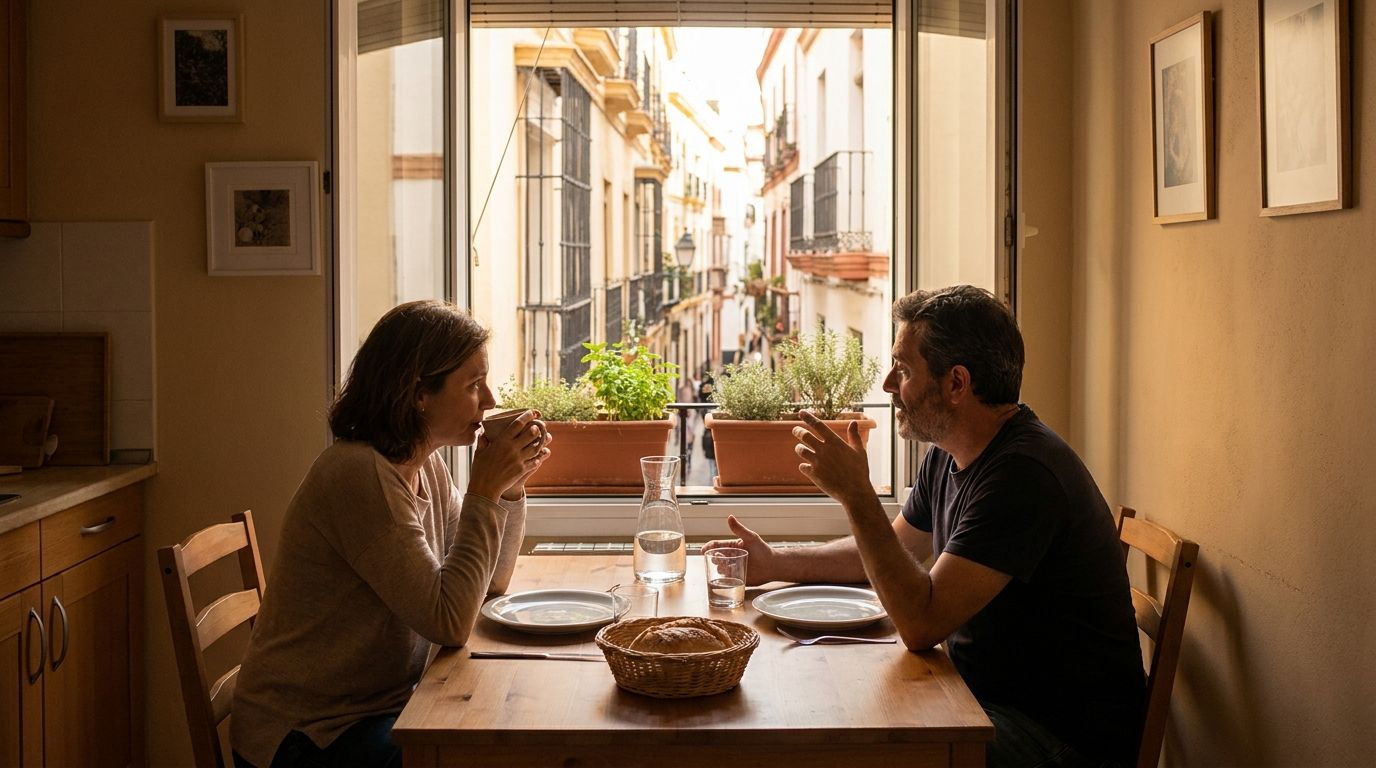
Maya Camp is standing in her kitchen in Austin with a bowl of cut oranges on the counter. She checks the time, then laughs, because she is already thinking about dinner again even though it is only 6:10 p.m. That habit, she says, is exactly what she wants when she pictures living in Spain: not the big moments, but the small ones that happen every single week.
If you are building a Someday plan for Spain, this is the part that actually matters. The "everyday abroad" life: school pickup, groceries, laundry, and the quiet relief of a routine that fits your actual body.
And yes, the Spain cost of living matters too. Not in a spreadsheet way. In a "can you breathe while you live here" way.
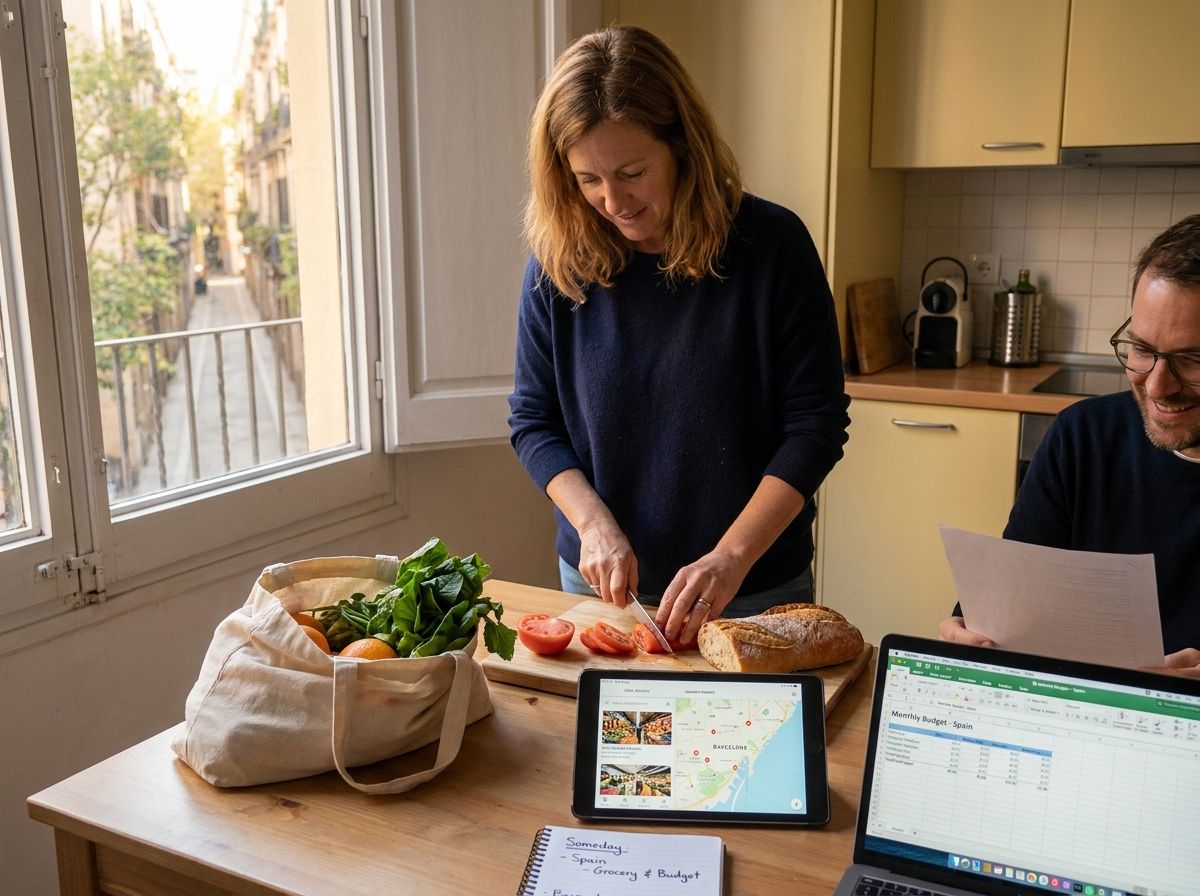
The weeknight you are really planning for
When you think "Someday Spain," you might picture a weekend train ride or a new neighborhood with pretty balconies. That stuff is real. But the life you actually build is made of repeatable Tuesdays.
Maya told me she stopped using the word "vacation" in her head. She started asking different questions.
- What do groceries look like when you are tired?
- What does it cost to feed two people for a normal week?
- What does transportation feel like when you have errands and you are not in tourist mode?
- How does the day flow when there is no one planning your schedule for you?
That shift sounds small. It changes everything.
The "everyday abroad" version of Spain is not one big event, but a rhythm. Some weeks are smooth. Other weeks feel like your brain is translating everything, even the things that should be automatic.
If you are American expat Spain-curious, you probably already know this. You have probably had the moment where you realize you are not just moving to a country, but moving to a different pace.
What a realistic weeknight rhythm can look like
A common story for new expats is that the first month feels like an extended to-do list. You are setting up accounts, figuring out where things are sold, and learning what your "normal" is in a place you do not yet know.
Then something changes. You stop bracing for every errand.
A weeknight can start like this:
- You pick up groceries close to home.
- You cook something that does not require a recipe app.
- You do laundry without a mini investigation each time.
- You walk or take public transit because it is just easier.
Spain has its own timing habits too, and they show up in real life. Meals often land later than what you are used to in the US. That can feel like a culture shock at first. Then it becomes normal, and suddenly you are the person who eats dinner at a time that would've made you side-eye yourself a year ago.
Because most people live in apartments, families plan around what their building can actually support: stairways, elevators, storage, noise. You will notice all of it the first time you carry four bags of groceries up to your floor.
Practical takeaways you can use this week
You do not need to move to Spain to start testing the weeknight reality.
- Pick a "school night" schedule for yourself now. Use it for two weeks. See what time you can realistically cook and clean.
- Do one grocery run using Spanish grocery names and brands. Even if you do it online, it forces you to learn your own preferences.
- If you are already interviewing neighborhoods, map a 20-minute radius around the places you would actually go on a Tuesday.
With SafeHavenGuide's adaptive learning system, you can also compare Spain expat lifestyle fit based on your priorities, not just visa checklists. It helps you connect "what you want" to "what you can actually sustain."
Spain cost of living: the numbers you feel, not just the headline
Spain cost of living gets talked about like it is a single number. It is not. It is rent, utilities, transit, and how much your life costs when you are not living like a tourist.
A lot of Americans do not get surprised by the grocery prices. They get surprised by how housing reshapes their whole budget. Rent is usually the biggest line item, and it is also the most emotional one. When rent is high, everything else feels expensive, even when it objectively is not.
If you are planning to live in Spain, you are also planning for the rhythm of costs.
Some months are predictable. Others are not.
- The month you move in has deposits, setup costs, and the "why is this more than I expected" feeling.
- The month your car breaks down, if you have one, is not a budget line you can ignore.
- The month you need a doctor appointment or a prescription is a reminder that health costs are part of real life, not a footnote.
So what can you do with this information? You can build a budget that matches your weeknight reality.
A simple way to sanity-check your budget for everyday life
Instead of starting with your dream neighborhood, start with your current habits. Then translate them.
Ask yourself these questions:
1. What do I spend on groceries in a typical week?
2. How often do I order takeout when I am tired?
3. How much do I spend on transit or rideshares when I do not want to walk?
4. What is my "I need a doctor" budget cushion?
Then you adjust for Spain.
You will see big differences by city and by how close you live to transit. You will also see differences in how easy it is to live without a car.
Many expats end up choosing a neighborhood that makes daily life easier even if rent is slightly higher. That can be a smart trade. Time is also a cost.
Where people get tripped up: the hidden budget traps
Even if Spain cost of living looks manageable on paper, the real surprises often come from the stuff that is not monthly rent.
Here are a few traps that show up again and again for Americans planning an expat lifestyle:
- Deposit and move-in fees that hit at the same time as your first month's rent
- Utility bills that feel different because of heating or cooling habits in older buildings
- Internet setup costs and the wait, sometimes weeks, to get it installed
- Medical insurance requirements that shift based on your visa or employment setup
If you have ever tried to open a new account in a foreign country, you already know the theme. It is not hard. It is just slow.
And slow things cost money when you are paying for temporary housing or waiting longer than you planned.
Practical takeaways that keep you from guessing
You can reduce guesswork with three grounded moves:
- Use a "weekly spend" mindset. Convert your current grocery and dining habits into a weekly number.
- Add a small buffer for slow admin weeks. Even a modest buffer helps your brain stop spiraling.
- If you are comparing cities, compare them like a resident. What does a normal commute look like on a Wednesday morning?
American expat Spain lifestyle: what changes day to day
This is the part people either romanticize or ignore. Both are unhelpful.
Your American brain is not going to stop being American. Your habits do not vanish. But your day-to-day life shifts.
It shows up in language, yes. Also in how people communicate, how appointments work, and how public life is paced. Smaller things too, like the fact that a lot of shops still close in the early afternoon (this caught me off guard the first time I tried to buy lightbulbs at 2 p.m.).
Maya said one thing she did not expect was how quickly she started measuring her life in "errand blocks." In the US, she used to do errands whenever. In Spain, she found herself grouping things because transit and shop hours made batching easier. Her life became more planned without feeling controlling.
That is the kind of expat lifestyle change you can actually plan for.
Social life is not just events, it is access
The "everyday abroad" version of Spain includes social moments that are not scheduled like a calendar invite.
It can be:
- seeing the same people at the same cafe on Friday mornings
- running into neighbors while walking the dog
- chatting with a shop owner who remembers what you bought last time
That kind of familiarity matters. It lowers the emotional cost of living somewhere new.
If you are moving with kids, the school routine becomes the social engine. If you are moving as a single person, your local community spaces do the same job. It is not automatic. It is built.
Built with repetition. You show up. You ask questions. You make small conversation. You laugh when you mispronounce something. You try again.
That is how "I moved" becomes "I live here."
Work and paperwork shape your evenings
Weeknight life is not only about leisure. It is also about how much mental energy you have left after work and paperwork.
Even once you are settled, ongoing administrative tasks do not disappear. Banking, renewing documents, and keeping records all take real time.
If you are preparing to live in Spain, plan for evenings that are not glamorous.
You might spend a Tuesday night making copies, translating a document, or organizing proof of something you hope you will never need. That can feel exhausting. It can also be oddly satisfying, like getting your life back under your own control.
A lot of Americans tell us they thought the move would feel like freedom. Then they realized the first phase is more like building a home base from scratch.
Practical takeaways for emotional stability
Your brain needs a plan too. Not just a visa plan.
Try this approach for weeknight sanity:
- Choose one "home ritual" you bring with you. Coffee, a specific meal, a walk after dinner. Anything.
- Put one social action on your calendar each week. Even a short one. Consistency beats intensity.
- Keep a small "admin night" routine. Twenty minutes, same time, same place.
Someday plans fail when you only plan for the exciting parts. They succeed when you plan for the parts you do not post about.
How to test Someday Spain before you commit
Someday Spain does not have to be a vague dream that sits in your notes app.
You can test it like a pilot episode. You are not trying to fully live there. You are trying to see if your life fits.
Maya said she started with something small: she picked one weeknight meal and cooked it while looking up how people actually buy the ingredients locally. She did not do it perfectly. She did it enough to learn what she liked and what felt like effort.
That is the point. You want data from your real preferences, not your best-case imagination.
A short "everyday abroad" checklist
Use this checklist the next time you are researching Spain expat lifestyle.
- Pick a city or region you would consider living in, not just visiting.
- Choose a neighborhood based on daily access, not just views.
- Estimate your weekly grocery spend using your current habits.
- Check what public transit looks like from your likely home area.
- Identify one place you would go regularly: a market, a gym, a park, a library.
Then try to imagine the weeknight version of your day.
What would you do on a rainy evening after work? Would you still go out? Would you rather cook? Would you walk to a nearby place, or would you need a car?
If your answer is "I do not know," that is not a dealbreaker. It just means you need more testing.
Build a "Tuesday plan" for your future self
Here is a trick that sounds silly until it actually helps.
Pick a Tuesday. Write down what you would do from 5 p.m. to bedtime.
Include:
- dinner plan
- where you get groceries
- how you get home
- what you do after dinner
Then compare it to what Spain would likely look like in that city.
This makes your plan real. It also makes your budget feel real, because you will stop relying on the fantasy of perfect weather and perfect timing.
Spain has great days. It also has weekdays.
And you want the weekdays.
Practical takeaways you can use right now
If you are serious about living in Spain, start with a "low-risk reality check."
- Do one month of budget tracking using your current home life as the baseline.
- Research one neighborhood at a time and focus on daily access, not aesthetics.
- Talk to people who have been there long enough to have routines. Not just people who took a photo at sunset.
And if you are using SafeHavenGuide to plan, you can turn these "everyday life" questions into relocation fit signals. That is how you go from Someday Spain to a plan that actually holds up.
FAQ
Is Spain cost of living really lower than the US?
It can be lower in some categories, but it depends on where you live and how you spend. Rent and housing setup often drive the biggest differences, and that is where many Americans feel the surprise. If you budget based on your actual weeknight habits, the numbers feel less mysterious.
What is the expat lifestyle like on weeknights in Spain?
Weeknights are usually built around local routines: markets, casual dinners, public transit or walking, and social life that grows through repetition. Meals often happen later than you may expect, and that timing shapes the whole day. The first weeks can feel like translation work, then it becomes more automatic.
Can I live in Spain without speaking Spanish?
You can start without fluency, especially in cities with international communities, but daily life gets easier as you learn. Grocery stores, appointments, and small conversations are where language shows up most. Even basic Spanish phrases can reduce stress fast.
How do I choose the right city for live in Spain plans?
Choose based on daily access and the life you want to repeat, not just the tourist highlights. Look for neighborhoods where you can reach groceries, transit, and everyday services without a car. Then estimate your weekly spend and see if it matches your comfort level.
Your Someday Spain plan can include weekdays
Back in Maya Camp's kitchen, she puts the oranges away and starts thinking about dinner again, like she always does. She is not dreaming about a perfect life. She is building one small habit at a time.
That is what you are doing too, even if your plan is still "someday."
If you want live in Spain to feel possible, plan for the weeknight version of your life. Budget for the costs you actually feel. Choose a neighborhood that supports your routine. Give yourself permission to test and adjust.
When you are ready, use your everyday priorities to guide your next steps. That is how Someday Spain stops being a fantasy and starts becoming a real path.
Join the conversation
Subscribe to comment
Join SafeHavenGuide's newsletter to leave a comment and get new posts in your inbox.