Someday South Korea: what everyday life feels like in expat life Seoul
South Korea can feel fast, clean, and quietly demanding. Here is what a South Korea move feels like on a normal Tuesday, plus realistic cost of living numbers.

You wake up to an apartment that's already warm. Coffee is done in under five minutes. Then you step outside and realize South Korea life is not just Seoul skyline views and K-pop stages. It is transit timing, neighborhood rhythms, and the kind of small wins that stack up once you know where to look.
If you are thinking about someday South Korea, this guide gives you the everyday picture: what expat life Seoul can actually feel like, what daily systems work and where they surprise you, and how to estimate cost of living South Korea without guessing.
With SafeHavenGuide's adaptive learning system, you can turn these impressions into a relocation fit plan and a budget baseline before you spend months collecting documents.
And yes, you will still want to visit Seoul once you get there. You will also want to know what it feels like to buy groceries, use transit, and handle paperwork when you are tired. That is what this is about.
What "everyday South Korea" feels like (beyond the headline)
On a normal weekday, South Korea can feel like it is running on schedules you did not study. Not in a harsh way. More like the country is built for flow.
You might live in a neighborhood where a convenience store is close enough to be your default stop. You might also live where groceries come from a mix of supermarkets, small markets, and delivery apps. Either way, the baseline holds: food is easy to access, and public spaces are usually well managed.
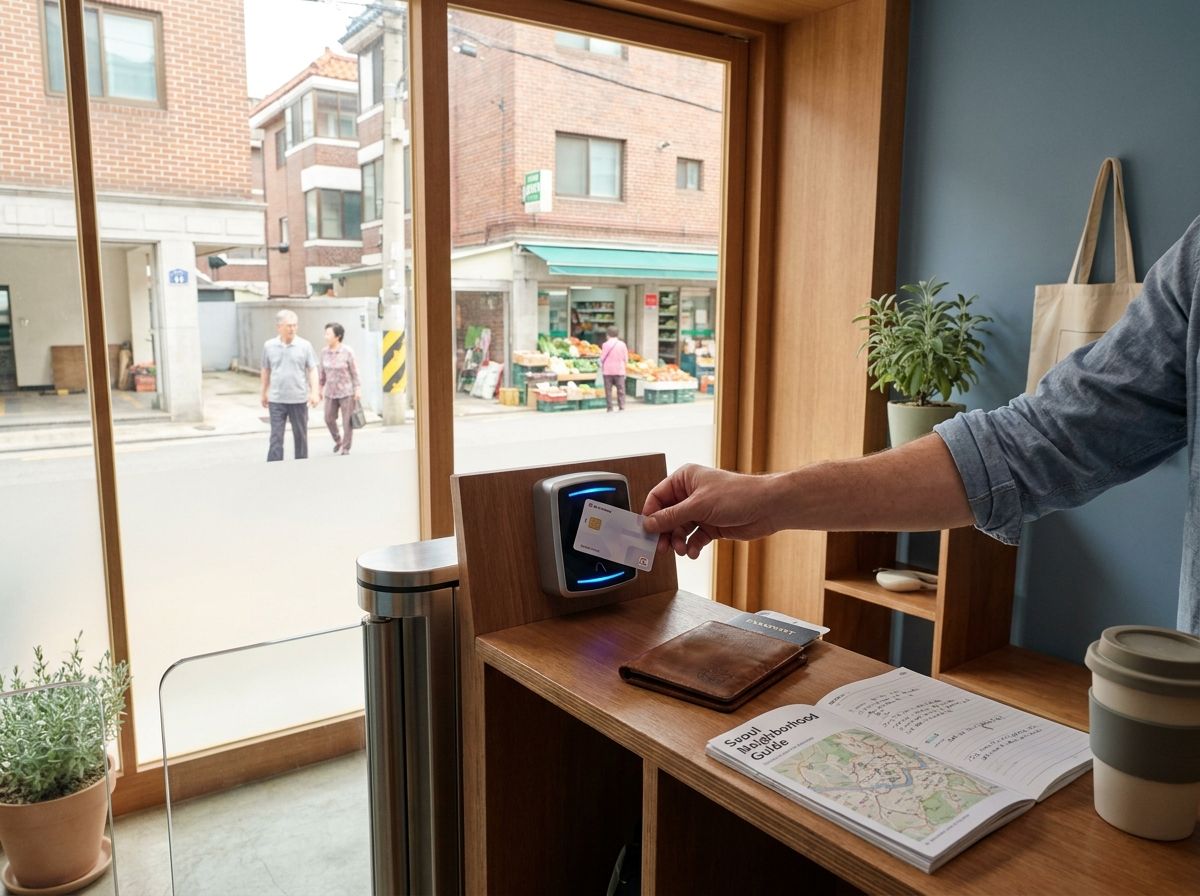
Here is a scenario worth picturing. It is 7:40 a.m. and you are trying to get to work. You tap your transit card, walk onto the platform, and the train arrives right as the crowd shifts forward. You do not need to be fluent in Korean to make this work, but you do need to pay attention to signs and announcements. If you have never lived somewhere where everyone reads the same platform numbers, it feels like learning a new language with your eyes.
Another scenario: you get home and realize your building rules are not optional. Some apartments have quiet hours. Some have recycling sorting. Some have a front desk that expects a specific delivery handoff. None of it is dramatic, it just means you will live like the building has a brain.
A third scenario: you try to buy something small, a phone accessory or a household item. You can often find it fast. You can also hit a "why is this different" moment, like a store that only accepts certain payment methods or a kiosk that assumes you already have the right account.
This is why moving to South Korea feels different from visiting. Visits let you stay in the best-lit version of the city. Daily life asks you to follow systems. The good news is that once you learn them, your week gets easier.
Expat life Seoul: daily routines that make or break your week
Seoul is not one single experience. It is a patchwork of neighborhoods with different noise levels, walkability, and housing vibes, and your day will depend entirely on where you land.
Start with the time math. In many parts of Seoul, transit is frequent and reliable enough that you can plan errands without building your whole life around a car. That matters if you are working long hours or raising a family. School pickups, bank visits, grocery runs, one loop, done.
But your routine will still have friction points.
One common friction point is language support. Even if you can get by in English in some places, you will still hit moments where you need real help. A government office, a medical appointment, a contract that needs explaining. People do not always have patience for "I think this means..." and you should plan for that honestly.
Another friction point is money flow. You might be used to a US banking setup where one app handles everything. In South Korea, you will often use a mix of cards, local apps, and sometimes cash for small purchases. Deposits, utility setups, and billing cycles that do not match US timing will all need attention.
Here are practical moves you can make before you feel overwhelmed.
- Pick one transit route and practice it until it feels boring. Do it on a day you have time, not on the day you are late.
- Decide what "good enough" Korean looks like for your week. You do not need fluency to order food, ask for directions, or read station signs.
- Keep a small paper folder or digital scan set. Save receipts, rental documents, and anything with your address written in Korean.
If you have kids, the routine changes again. School schedules, after-school programs, and form-heavy admin can take more time than you expect. Even if you are not working full-time, your week can fill up fast.
And if you are planning a slower pace, you will still feel the city's energy. The key is choosing a neighborhood where daily needs are walkable, so every errand does not become a production.
Cost of living South Korea: what to budget for rent, transit, and groceries
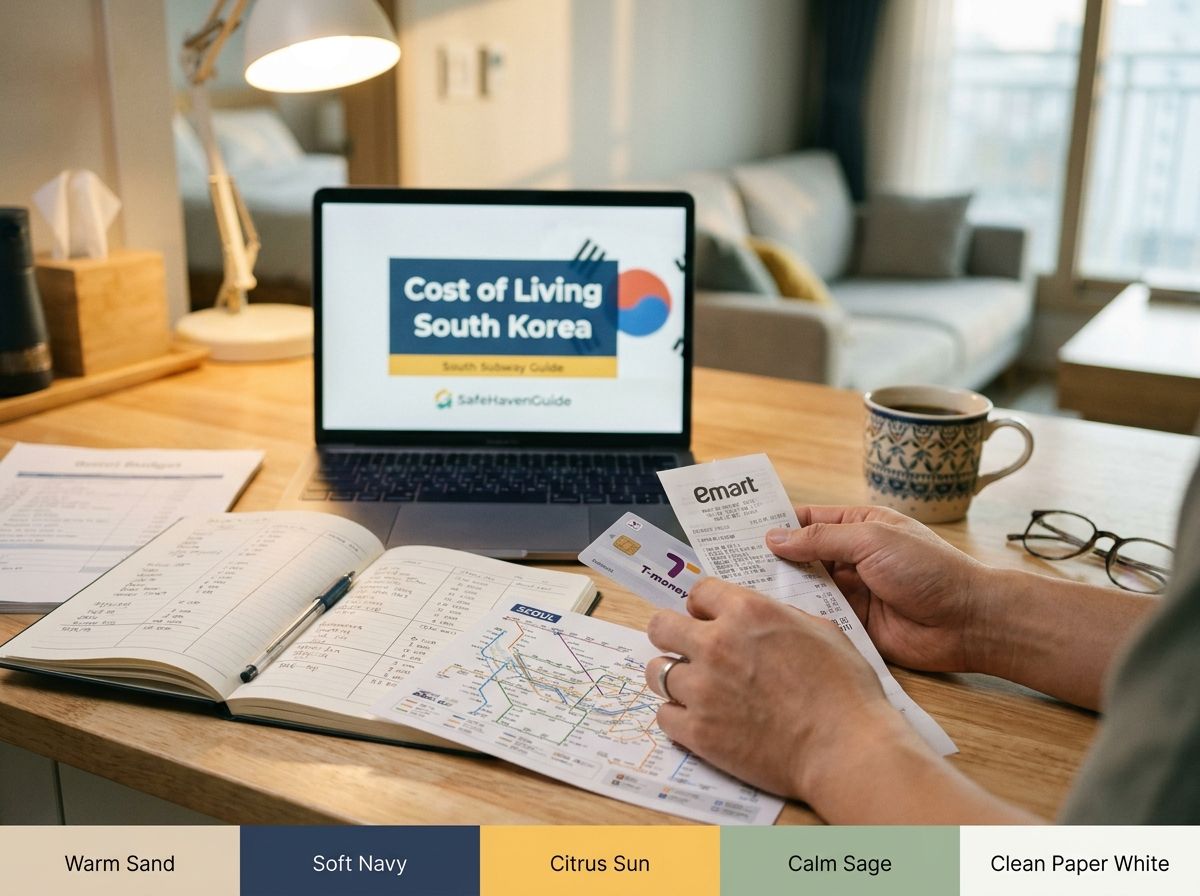
Cost of living South Korea is not one number. It shifts by neighborhood, housing type, and how much you pay for convenience.
The biggest swing factor is housing. Full stop.
In Seoul, rent runs high in popular areas. Housing is also structured differently than in the US. Some rentals use large upfront deposits. Others use monthly rent plus smaller fees. Budget for both, because the cash flow timing can catch you off guard.
Transit is usually not where surprises hit. Monthly costs can be manageable if you lean on public transport instead of taxis. But build in a buffer for occasional taxi rides, airport trips, and weekends when you are off your usual route.
Groceries can feel affordable, but the "how" matters. Rely on convenience stores for everything and your budget will climb. Shop at supermarkets and local markets and your spending gets more predictable. (I've seen expats blow their grocery budget in the first two weeks just from snack-aisle convenience store runs, so the habit matters early.)
Healthcare is its own category. Coverage paths vary depending on your visa type and employment situation. Even with solid coverage, budget for co-pays, prescriptions, and dental care.
To make this real, use a simple monthly budget model built around these buckets.
- Housing: rent plus expected deposit-related cash flow
- Utilities and internet: monthly baseline
- Transit: commutes plus a buffer for weekends
- Groceries: a mix of markets and prepared foods
- Healthcare: insurance plus predictable out-of-pocket
- "Life stuff": phone plans, household items, clothing
Research you can sanity-check: Numbeo and similar aggregators often show Seoul as one of the more expensive cities in Asia. They are not perfect, but they give you a starting point. For broader context, the OECD and World Bank publish cost-related indicators, though they are rarely city-specific enough to be definitive.
Also, remember that exchange rates change your experience. If your income is in USD and you convert, a rate shift can make your first months feel tighter even if local prices stay flat.
If you are using SafeHavenGuide for planning, treat your first budget pass as a draft. Adjust after you compare two or three neighborhoods and two housing styles.
Practical scenarios: paperwork, money, and "wait, what?" moments
Here are three concrete moments that often catch Americans off guard when planning a move abroad. Not horror stories. Just the normal kind of surprise that costs time.
Scenario 1: You sign a lease, then realize the move-in process is not US-simple
You find a place you like in Seoul and move fast because you want stability. Then you learn about building rules, move-in schedules, and how deposits are actually handled.
Your action: before you sign anything, ask for a written checklist of move-in steps. Ask what you pay on day one. Ask what you pay at month one. Ask when utilities and internet start.
If a landlord or agent gives vague answers, pause. You are not being difficult, you are preventing a cash crunch.
Scenario 2: You need a local phone plan, and the "easy shop" is not easy
Buying a phone plan can feel simple until you hit identity or account requirements. Sometimes you need a local verification step. Sometimes you need documents you have not pulled together yet.
Your action: make a document scan set before you arrive. Keep your passport, visa paperwork, and proof of address ready. If you have a rental contract, include it.
Also decide whether you want a plan that supports data for maps and translation right away. It is a quality-of-life upgrade, not a luxury.
Scenario 3: You go to a medical appointment and discover how prescriptions work
Healthcare systems can feel different even when the quality is high. You might need to understand how prescriptions are filled, how pharmacy pickup works, and what paperwork a clinic expects from a foreign patient.
Your action: bring a one-page medical summary. Include allergies, current medications, and any diagnosis names in generic terms. If you have a doctor back home, ask for a letter with generic medication names listed.
This removes the "we are both guessing" dynamic from a moment where guessing is the last thing you want.
There is a fourth scenario nobody talks about: mail and address formats. In Seoul, your address format is not always what you expect, which means packages can arrive late if you get it wrong.
Practice your address format early. Then double-check it every single time you order something.
Visa and relocation reality: how to plan without losing months
This section is not about turning you into a visa lawyer. It is about protecting your momentum.
When you are planning to move to South Korea, your timeline is often the first thing that breaks. You might find a job, then wait on paperwork. You might get family documents together, then discover translations take longer than expected. You might plan a move date and then realize your housing search overlaps with visa processing.
To keep your plan realistic, do three things early.
- Build a document calendar with dates you can control. Translation and notarization are often the slow parts.
- Decide which proof you will use for your "ties" and your purpose. Your visa intent needs to be consistent across forms.
- Plan for a settling-period budget. Your first month can cost more than your monthly average because you are standing up the basics from scratch.
If you want a check against common delays, look for patterns from US embassy guidance and typical processing timelines. Timelines vary by visa type and season. What stays consistent is the need for clean documents and clear presentation.
Do not wait until you have everything to start learning daily life systems. You can practice transit routes, map neighborhoods, and identify two or three grocery options before you arrive. That turns your first weeks from survival mode into adjustment mode.
With SafeHavenGuide's adaptive learning system, you can connect your visa path planning to your day-to-day fit questions. Do you want a neighborhood where you can walk? Do you need easy access to healthcare? Do you want a commute that does not drain you? These are relocation decisions, not just preferences.
Neighborhood fit in Seoul: where expat life feels easiest
You can live in Seoul and still never feel like you live in Seoul. That is how neighborhood fit works.
Some areas feel like you are always near transit and services. Others feel quieter, with local markets and slower foot traffic. Some neighborhoods are built for families. Others suit people who work late and prefer a short taxi ride when energy runs low.
Instead of hunting for the "best" neighborhood, pick your priorities and test them.
Try this mini-neighborhood test on a normal day.
- Walk from your likely housing spot to one grocery option and one pharmacy. If you hate the walk, you will hate it every week.
- Check transit access at the time you would actually commute. A route that feels fine at 10 a.m. can feel completely different at 7:30 a.m.
- Look at how deliveries work. You do not need to love delivery culture, but you need to know it will function where you live.
Then look at noise. Seoul has plenty of apartments sitting above shops and nightlife streets. If you are sensitive to sound, ask specifically about building insulation and typical street noise at night.
If you are planning for cost of living South Korea, neighborhood choice can shift your rent more than any other single decision. It also changes your spending patterns. A location with fewer nearby options pushes you toward taxis and convenience stores, and that is how budgets quietly get weird.
Here are three practical fit examples worth keeping.
- If you want a family-friendly routine, prioritize areas with reliable transit and predictable access to schools and clinics.
- If you commute to an office daily, prioritize route simplicity over proximity to trendy nightlife.
- If you are planning a slower pace, prioritize walkability to daily needs and quieter residential blocks.
None of this requires you to love Seoul all the time. You just need your week to feel manageable.
What to do before you arrive: your first 30 days plan
Your first month in South Korea is about creating a stable baseline. Not about seeing everything.
You want a setup plan that covers the basics quickly.
- Housing: confirm move-in steps and building rules in writing
- Phone and internet: decide how you will get online for maps and translation
- Money: plan how you will pay for daily needs without constant friction
- Healthcare: understand how to book appointments and fill prescriptions
- Address: standardize your address format for deliveries and paperwork
Do these early and you reduce the mental load significantly. You stop spending energy on "where do I go" questions and start spending energy on "what do I want to do" questions.
Also, give yourself permission to be slightly awkward. You will ask for help. You will use translation tools more than you planned. That is fine. Your goal is not performance. Your goal is stability.
Here is a small trick that helps more than it sounds: pick one neighborhood route and repeat it until it feels automatic. Your brain relaxes when it stops scanning for surprises.
And yes, go out. Just do it with a plan. If you are tired, choose a low-stakes outing, a market stroll or a café near a transit stop you already know.
FAQ
Is Seoul a good place for Americans moving to South Korea if I do not speak Korean?
Yes. You can get by with basic phrases, translation apps, and patience, especially in neighborhoods with more English support. You will still need help for paperwork and some medical or government steps, so plan for that early.
What is the real cost of living South Korea for an expat?
Housing drives most of the variation. If you choose a popular area or a higher-end apartment, your budget will jump. If you balance rent with predictable transit and market shopping, your monthly spending can be more stable.
How is expat life Seoul different from living in a smaller city?
Seoul offers more transit options and more services overall, but it also has more crowds and faster daily rhythms. Smaller cities can feel slower and sometimes cheaper, but you may have fewer conveniences depending on where you settle.
What should I budget for in my first month when moving to South Korea?
Expect more than your monthly average because you are standing up the basics. Plan for deposits or upfront housing fees, utilities start-up, phone setup, and household items. Keep a buffer for the "oops" purchases that happen when you are learning local systems for the first time.
Do I need to plan my visa timeline before I look for housing?
You do not have to wait, but you should align your timeline so housing choices match your move-in date. Document processing and translations can take longer than expected, so lining up dates early reduces stress and wasted searches.
Next step
If someday South Korea is your plan, pick one thing you can do this week: choose two Seoul neighborhoods that match your routine, then draft a realistic first-month budget for each. When you can see housing, transit, and groceries side by side, your decision stops feeling like a vibe and starts feeling like a plan.
If you want help turning that plan into a relocation fit path, use SafeHavenGuide to map your visa timeline questions and your day-to-day needs into one checklist you can actually follow.
Join the conversation
Subscribe to comment
Join SafeHavenGuide's newsletter to leave a comment and get new posts in your inbox.