Someday Mexico: could you live well on a realistic monthly budget?
You can live in Mexico without living broke. Here’s how expat budget Mexico actually works for housing, food, transport, and the “surprise” costs.

You can smell the limes before you see the kitchen. Maya Camp is chopping cilantro at 7:10 a.m., and the radio is doing that familiar thing where it sounds confident even when it's wrong. On the counter sits a printed spreadsheet with a question on top: "If we live in Mexico, can we still pay for life, not just survive it?"
That question is the whole point of Someday Mexico. Not the fantasy version. The budget version. The one where your month has rent, groceries, health needs, and a little breathing room, all at once.
With SafeHavenGuide's adaptive learning system, you can map your real-life spending habits to the way Mexico costs actually land day-to-day, so your expat budget Mexico plan is built for your choices, not someone else's.
The honest answer: Mexico budgets work if you match the lifestyle to the city
Let's start where your brain already goes. You want to live in Mexico, but you also want your month to feel normal. That means you need to anchor your expat budget Mexico on where you'll live, because Mexico is not one price level.
Mexico City, Guadalajara, and Monterrey can feel expensive compared with many smaller cities and coastal areas. Coastal towns can also swing hard based on season and demand. Meanwhile, places with steady local demand often price out more predictably.
You're not "bad at budgeting" if your first estimate looks too low. It's usually missing one of these:
- Rent that matches your comfort level (not the cheapest listing you can find)
- Health care costs when you actually need care, not when you're healthy
- Transport costs that include the real rhythm of your week (taxis, rideshares, fuel, parking)
- Taxes and fees that show up because you moved, not because you planned perfectly
Here's a way to think about it that keeps you sane. Your budget needs three layers: the baseline month (housing, utilities, internet, groceries, basic transport), the "we live here" layer (phone plan, household supplies, occasional eating out, local services), and the life layer (health needs, trips back to the US or travel inside Mexico, and the stuff that breaks). If you can cover all three layers, you can live well on a realistic monthly budget.
A practical takeaway for your first Mexico budget
Pick a city range before you pick a number. Then build a budget that matches the pace you want.
If you tell yourself, "I'll cook most nights and use public transit," you can often make your money stretch more than you expect. If you tell yourself, "We'll go out often and rely on rideshares," your budget needs to follow that choice. The budget is not a moral test. It's just math.
Housing is the budget boss: rent choices decide everything
A lot of Americans moving to Mexico focus on currency conversion, then get blindsided by housing reality. Not because rent is always high, but because housing is where you decide your day-to-day quality of life.
When people say "Mexico is affordable," they often mean they found a rent listing that looks great online. Then the move happens. The deposit is due. The building has rules. The unit needs repairs. The neighborhood turns out to be farther from what you actually do every week.
So you're budgeting for more than rent. You're budgeting for stability.
What to plug into your monthly rent math
Use a "comfortable" rent target, not the lowest possible rent.
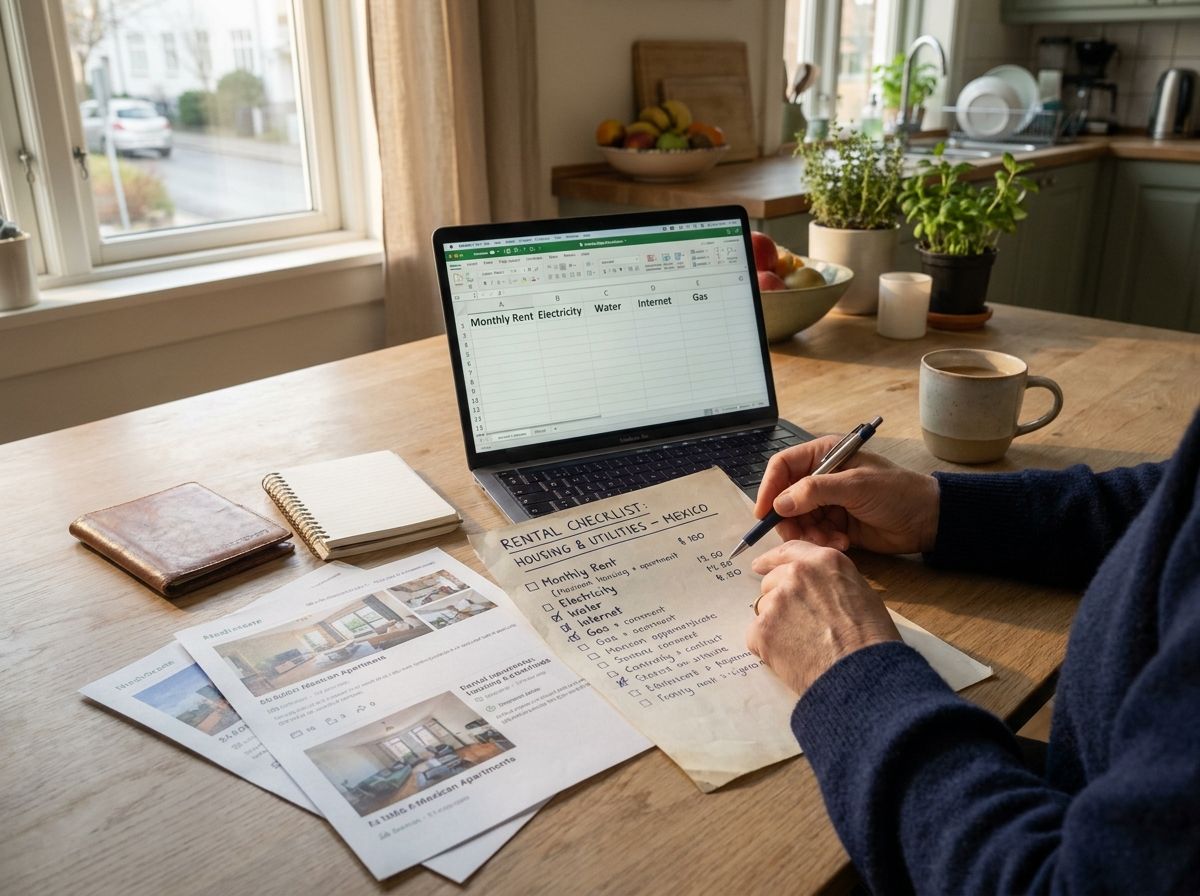
Here are the line items that commonly show up in expat budget Mexico planning:
- Rent (your best guess for a unit you'd actually stay in)
- Electricity and gas (air conditioning is the big swing factor)
- Water service and building fees (some areas bundle these; others don't)
- Internet (your work needs matter more than you think)
- Maintenance and small replacements (lightbulbs, locks, screens, minor repairs)
A quick reality check: if you're used to US utility pricing, Mexico utilities can feel unpredictable when A/C is involved. In warmer months, electricity is often the cost that surprises people most.
Also consider how you'll move around. If your housing is cheap but you spend more on taxis to reach work, schools, or your preferred grocery store, your "savings" can evaporate fast.
A practical takeaway for housing decisions
Before you commit, ask yourself one question: "If we lived here for a year, what would we hate paying for every month?"
Then budget for that hate. It might be A/C electricity. It might be transport. It might be a longer commute. Give your future self the courtesy of planning for what you already know will annoy you.
Groceries and eating out: you can control this more than you think
The first time you grocery shop in Mexico, it can feel like a win. Fresh produce is plentiful. Meals can be delicious and inexpensive. You might even catch yourself thinking, "Wait, is this really our life now?"
Then you try to eat the way you did in the US, and the pattern becomes clear. Buy a lot of imported products, convenience foods, and brand-specific items, and your budget climbs fast. Cook with local staples, and you usually get more value.
This is also where families feel the difference most sharply. Kids can be picky in any country. If you need specific foods for specific people, your groceries line item needs room.
A simple way to budget food without guessing
Instead of guessing a monthly grocery number, budget it like you budget your time.
Try this monthly method:
- Set a grocery target based on your cooking frequency
- Set an eating-out target based on your social routine
- Add a buffer for the "we had a week" purchases (snacks, extra meals, last-minute convenience)
Use your current habits as the starting point. If you cook 4 nights a week now, plan for 4 nights a week in Mexico. If you eat out 3 times a week now, plan for that, then decide if you want to change it.
Food budgets work best when your plan matches your actual behavior, not the behavior you wish you had.
A practical takeaway for food planning
Pick one "local anchor" meal you'll repeat. Tacos, rice bowls, soups, whatever fits your routine. When you repeat a meal pattern, your grocery list gets simpler. Your budget gets steadier.
Health care and insurance: plan for the month you need it
Health care costs are where budgets stop being theoretical.
Even if you feel healthy, you need a plan for the month you don't. That can mean a doctor visit, a prescription, a lab test, dental work, or a specialist appointment. And if you're American moving to Mexico, you also need to decide what health coverage looks like for your situation, because the options vary more than most people expect. Some expats use private care exclusively; others mix private visits with out-of-pocket payments for routine stuff.
The key budget move is this: don't assume "health care is cheap" equals "health care is predictable."
It can be both. But your predictability depends on how you access care and how you pay.
What to budget for health care in Mexico
Your monthly health line item might include:
- Regular checkups and routine care
- Prescriptions you know you'll need
- Dental or vision needs (often scheduled, not emergency)
- A separate "when something happens" reserve
It's okay if your health costs are low most months. You still need the reserve.
A practical takeaway for health costs
Create a "medical buffer" in your budget even if you don't think you'll use it. If you never use it, that's still a win. If you do use it, you avoid the stress spiral where you cut everything else to cover one unexpected bill.
How to set your expat budget Mexico number without getting stuck
You might be thinking, "Okay, but what number do I use?" You want a realistic monthly budget you can actually plan around.
Build your number with a method that doesn't pretend every month is identical.
The budget formula that keeps you honest
Start with these categories:
- Housing and utilities
- Food and household supplies
- Transport
- Health and medical buffer
- Phone and internet
- Insurance or other recurring fees
- Personal spending (clothes, hobbies, social life)
- Travel or family support (if it's part of your reality)
Then add a buffer for the move itself and the first-year rhythm. Even when you plan well, you'll spend money that doesn't show up in "monthly" budgeting.
This is where people often underestimate:
- One-time setup costs (furniture, kitchen basics, bedding)
- Repair or replacement purchases
- Fees tied to local life (sometimes paperwork, sometimes services)
- Adjustments when you learn your neighborhood
A practical takeaway for your "real monthly" target
Decide what "live well" means for you. It might be:
- A clean, comfortable home with reliable A/C
- Eating out once or twice a week without guilt
- Health care access that doesn't force you to delay everything
- Enough money left over to handle surprises
Then build a budget that supports that definition.
And if you want permission to be realistic: you don't need to live like a minimalist to live well abroad. You just need to be clear about what you value and what you're willing to trade.
Common budget traps for Americans living in Mexico
Here's the part where we name the stuff that makes people feel embarrassed after the fact. It's not your fault for not knowing. It's just the kind of information that doesn't show up until you're already in it.
Trap 1: assuming the cheapest rent is the best deal
Cheap rent can cost you in transport, safety tradeoffs, and time. Time is money. Also, time is sanity.
Trap 2: forgetting electricity swings
If you use A/C regularly, your electricity bill can be the difference between "affordable" and "why is this so high?"
Trap 3: using US spending habits without the US salaries
If you spend like you're still in the US, your budget needs to match that. Some people keep the same lifestyle. Others adjust. Either is okay, but pick intentionally.
Trap 4: not planning for health care access
If you want to live in Mexico without constant uncertainty, you need a health plan that fits your comfort level.
A practical takeaway: run a "stress test"
Take your monthly budget and imagine one bad month. Maybe you need a dental appointment. Maybe your A/C use spikes. Maybe a family member needs help. If your plan can handle that bad month without panic, you have a realistic budget.
A community moment: the budget conversation you wish you had earlier
Maya Camp tells me she did the spreadsheet thing at the worst possible time. It was right after the first "we found a place!" message and right before the first deposit conversation. She was excited. Then she got quiet.
Her partner asked, "Are we doing this?"
Not because they didn't want Mexico. They wanted Mexico. They also wanted to keep their lives steady. So they built a budget that included the things they actually cared about: a home that felt good to come back to, groceries they didn't resent, and a health plan that didn't feel like a gamble.
That's the emotional core of a Someday Mexico move. You don't need to be fearless. You need to be prepared enough that fear doesn't run the show.
FAQ
Can Americans live in Mexico on a monthly budget?
Yes, many Americans can live in Mexico on a realistic monthly budget, especially if housing and health care are planned thoughtfully. The budget works best when you match your city choice and lifestyle habits to your spending plan.
What is the biggest cost in an expat budget Mexico plan?
Housing is usually the biggest predictable line item, and utilities can swing the number depending on A/C use. Transport and health care planning also matter a lot because they affect your month even when you do everything "right."
Is Mexico cost of living cheaper than the US?
In many areas, Mexico cost of living can be lower than the US, especially for groceries and local meals. But your personal spending habits, neighborhood choice, and health care setup can move your total cost up or down.
How do I estimate my budget before moving to Mexico?
Use your current routine as the baseline, then replace categories with Mexico-real numbers: rent for the lifestyle you want, utilities based on likely A/C use, and a health buffer for real care. Then stress test your plan for one "bad month" so you know it holds.
Your next step
If you're serious about Someday Mexico, pick one city you could realistically live in and write down your current month categories on paper. Then build a Mexico version that includes housing utilities, food habits, transport rhythm, and a health buffer.
When your budget is built this way, it stops being a scary unknown. It becomes a plan you can trust, even when life gets messy.
Join the conversation
Subscribe to comment
Join SafeHavenGuide's newsletter to leave a comment and get new posts in your inbox.