
Someday Canada: what a move to Canada from the US actually looks like
Canada sounds simple until you map the steps. Here is what an American expat Canada relocation really involves, from immigration options to first-month reality.

You've typed "move to Canada from US" into your search bar six times this month. Maybe more. The fantasy feels clean and simple. The paperwork does not.
Someday Canada is not a single application. It's a chain of decisions: which immigration option fits your actual life, what documents you can realistically pull together from the US side, and how you plan for money, housing, healthcare, and timing. This post walks through what the move looks like in real time, with scenarios you can hold up against your own situation.
And yes, you will still have to read some instructions. I'm sorry. (I'm also basically you, so I get it.)
Start with the "move" definition, not the destination
When people say "move to Canada," they usually mean one of three things:
- You want to live in Canada long-term.
- You want to work in Canada.
- You want your family to join you and stay.
Those three goals change everything. If you're aiming for permanent residence, your path usually runs through options like Express Entry or a provincial nomination. If you're aiming for a temporary work permit, you still need a plan for how you'll extend or pivot to longer-term status down the road.
Here is what the move looks like from the ground up. You pick a target city because you want a commute that doesn't ruin your evenings, then you look at housing and realize deposits and lease rules aren't the same as back home. After that, you look at healthcare access timelines, because you cannot "wish" your way into coverage the day you land.
Provincial systems matter in Canada. In most provinces, there's a waiting period before you qualify for provincial health coverage. The exact timing varies by province and situation, so check your destination province directly once you have a short list.
So your first practical step is not "choose a visa." It's "choose a realistic end state."
A real scenario: the kitchen calendar test
Maya Camp (yes, the one you're imagining as a calm, organized person) sits at a dining table with a paper calendar. She circles two dates: when her US lease ends and when she wants to start work in Canada. Then she writes a third date: the earliest week she could realistically submit a complete immigration application. That third date forces her to stop daydreaming and start building a timeline.
If you skip this step, you end up with a half-built plan, a dream city, and a folder of documents that never gets used.
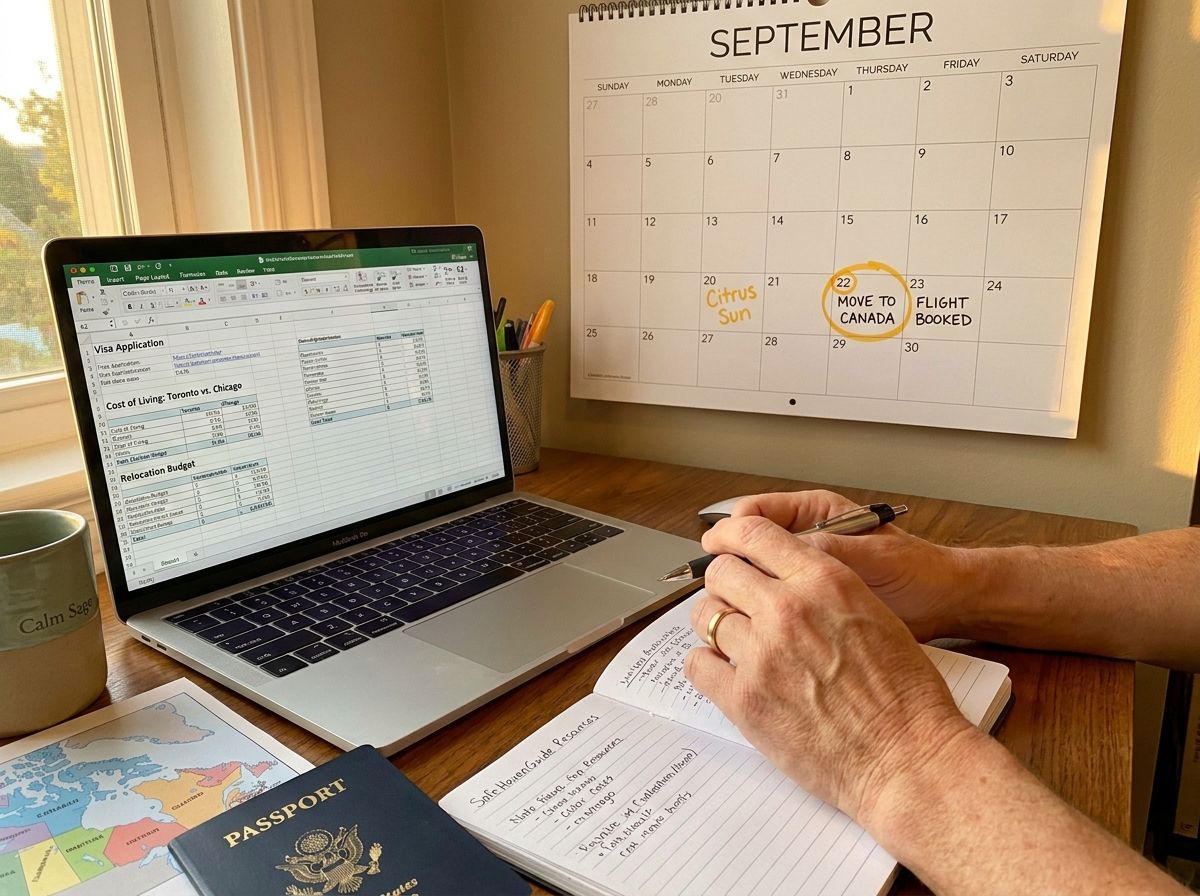
Immigration options: what you can do as an American expat Canada plan
The phrase "American expat Canada" makes it sound like you're just sliding your life across a border. Immigration options are the part that decides whether you can stay, work, and bring family.
For many Americans, the most talked-about routes are:
- Express Entry (for skilled workers and certain profiles)
- Provincial Nominee Programs (PNPs) (where provinces nominate candidates who match local needs)
- Family sponsorship (if you have a Canadian partner or eligible family member)
- Study permits (when you plan to study first, then pivot)
- Work permits (often tied to a job offer)
Temporary pathways exist too. But temporary status has an end date, so you still need a longer-term plan from the start.
Here's a practical way to think about it: match your current life to the rules, not the other way around.
Example 1: "We have the degree, but not the job offer"
Say you're in Boston with a master's degree. You want to move to Canada for work, but you don't have a Canadian job offer lined up. Express Entry might still be possible depending on your work history and other factors. A work permit is harder without an offer.
The move here is to pull your work history into a single document and list what you actually did, then compare that against the occupation codes and points logic used for Express Entry. This is where vague resumes trip people up.
Example 2: "We want a specific province for family reasons"
Say you want to live near family in Ontario or Alberta. A provincial nomination can fit better than a federal route, depending on your situation. The strategy becomes two steps: build a profile that fits the province's criteria, then apply.
Example 3: "One partner qualifies, the other does not"
In many couples, one person has the stronger work or education profile. That can still work. You plan for who applies first, what status the other partner holds, and how work authorization gets handled after arrival.
If you're unsure which option fits, SafeHavenGuide's adaptive learning system helps you compare your situation to multiple Canada relocation paths so you don't waste months collecting the wrong documents.
The paperwork reality: what you actually gather from the US
You don't just "submit a form." You build a paper trail that proves identity, eligibility, and intent. That means documents from US agencies, translations if needed, and proof that your information is consistent across applications.
The biggest surprise for Americans is how long certain documents take to arrive in usable form. Some are quick. Others take weeks, and some require notarization or apostilles. If you wait until you feel motivated, you'll lose time.
Build your document system like you're preparing for a move, not a vacation.
Your document workflow that does not fall apart
Use this sequence to keep momentum:
1. Create a "Canada folder" on your computer and a matching paper folder.
2. List every required document by immigration option, then assign your current status to each item.
3. Order the US documents with the longest lead times first.
4. Only then do you start filling out forms that depend on those documents.
That order matters because many forms ask for details you only have once you hold the actual document.
What consistency looks like in real life
If your name appears differently across documents, expect delays. If your address history is messy, expect follow-up questions. If your employment dates don't line up with your pay stubs and letters, you will get stuck.
This is where people do the "I'll remember it later" thing. They don't. You shouldn't.
One American I helped (not naming names, but you know the type) had a job title on a resume that was slightly different from what appeared on an employment letter. It felt minor. It wasn't. The fix required a rewrite and a new letter from the employer.
Canada immigration applications reward boring, clean, consistent information.
Canada relocation logistics: housing, healthcare, and the first-month budget
You can have your immigration ducks in a row and still get wrecked by the first month.
Housing is the most common shock. In many Canadian markets, you'll compete for rentals, face higher deposits than you expect, and need references and proof of income that you can't magically produce on arrival.
Then healthcare. Canada has public health coverage through provinces and territories, but you often don't get it instantly. If you don't have coverage right away, you need a private insurance plan for the gap.
Taxes also feel different. You'll likely deal with Canadian tax rules once you earn income there. If you keep US accounts, you may also handle cross-border reporting requirements. Not the place for panic, the place for planning.
A realistic first-month scenario: Toronto, winter, and a short fuse
Picture moving to Toronto in January. You arrive with a suitcase and a stack of documents. You find a rental that's available immediately, but the lease starts mid-month. You pay a deposit, you pay the first month, and you realize you also need basics right away.
So you plan for:
- Temporary housing costs (if your lease timing is off)
- Insurance for any coverage gap
- Transport costs to get to work and appointments
- Furniture and household basics you didn't pack
If your budget was built only around rent, you'll feel it fast.
How much should you budget for the move itself?
Budget enough to absorb timing mismatch. Flights can shift. Work start dates can shift. Apartment move-in dates can shift.
A practical approach: build a "move buffer" that covers at least one extra month of housing and insurance, plus a realistic grocery and transit baseline.
If you want numbers, SafeHavenGuide's cost of living tools can help you estimate your real monthly budget abroad for your chosen city. Use it as a planning baseline, not a promise.
Arrival planning: the week you land is not the week you relax
The week you land in Canada is a sequence of tasks dressed up as "settling in." You're not just unpacking. You're trying to establish your life fast enough to keep everything else running.
What you need depends on your province and your status, but the pattern is consistent.
The arrival checklist that prevents chaos
Use this as your working list:
- Confirm your accommodation and transportation plan for the first 7 to 14 days.
- Keep your key documents accessible (digital copies and paper copies).
- Track your healthcare coverage steps for your province.
- Set up banking and payment options that match your situation.
- If you are working, confirm your work authorization details.
You might also need to handle phone plans, internet setup, and address registration.
And then there's the emotional part. You may feel relief for a day. Then it hits: you're in a new system, new rules, new routines.
If you have kids, school enrollment timing matters. If you have a partner, work authorization timing matters. If you're retired, healthcare and prescription access timing matters.
Example: the "we thought it would be faster" moment
In Vancouver, an American couple arrives with a plan to start school and work immediately. The rental is fine, but the healthcare coverage timeline doesn't align with their arrival date. They spend the first weeks buying private coverage and chasing paperwork.
They get through it, but they wish they'd built a buffer earlier. That buffer isn't about having "more" money. It's about having flexible money.
With SafeHavenGuide's adaptive learning system, you can run your plan against relocation fit signals so you spot the friction points before you book flights.
Making Someday Canada real: a 30-day action plan you can actually follow
You don't need a 12-month spreadsheet to start. You need a first-month plan that turns uncertainty into tasks.
Here is a 30-day action plan built for Americans planning to move abroad.
Week 1: lock the end state
Pick your goal:
- Permanent residence or long-term stay?
- Work in Canada from day one?
- Family joining timeline?
Then write down your target province or city shortlist. You don't need to choose forever. You need a shortlist you can price and plan.
Week 2: choose the immigration option to investigate deeply
Don't "collect visas." Choose one option to study first, based on your profile.
Write down:
- What documents you will need
- What lead times you expect from the US
- What would disqualify you or slow you down
If you have a partner, decide who is applying and who is supporting, based on eligibility.
Week 3: build your document timeline
Order the slow stuff first.
Create a checklist with dates. If you can get a document in 10 days, great. If it takes 6 weeks, schedule it now. This is where your move buffer starts.
Week 4: estimate your first-month reality
Use a cost of living estimate for your target city. Then add move-in friction:
- deposits
- utilities setup
- any insurance gap
- transport and groceries for the first month
If the plan feels too tight, loosen one variable. Pick a different move month. Choose a different city shortlist. Adjust your buffer.
Then do the boring thing: fill out forms only after your documents are ready.
If you work this for 30 days, Someday Canada becomes a project instead of a mood.
FAQ
What is the easiest immigration option for Americans moving to Canada?
There is no single easiest option. The best path depends on your work history, education, family ties, and whether you have a Canadian job offer. Many Americans start by comparing Express Entry, provincial nomination, and family sponsorship against their current profile.
How long does it take to move to Canada from the US?
Timelines vary by immigration option, document readiness, and processing times. Your personal timeline also depends on how quickly you can obtain US documents like identity records and any required background checks. Build a timeline that assumes delays, not instant approvals.
Can I work in Canada right away after I arrive?
Sometimes, depending on your status. If you arrive with a work authorization or a work permit tied to your arrival, you may be able to start working soon. If not, you may need to wait for authorization or apply for a different permit.
Do I get healthcare immediately when I move to Canada?
Usually not on day one. Public healthcare is run by provinces and territories, and many people face a waiting period or conditions based on their situation. Plan for private insurance during any gap.
What should I budget for when relocating to Canada?
Budget for more than rent. Deposits, move-in costs, utilities setup, transport, and any insurance gap add up quickly. A move buffer for timing mismatch is often the difference between "smooth" and "survival mode."
Practical takeaway: pick one path, then build your timeline
Your next step is simple. Choose one immigration option to investigate deeply for your specific profile, then build a document timeline with real dates from the US. Do that, and you'll stop living in "someday" and start living in a plan.
When you're ready, run your situation through SafeHavenGuide so you can compare Canada relocation paths and spot the friction points before you commit to flights.
Join the conversation
Subscribe to comment
Join SafeHavenGuide's newsletter to leave a comment and get new posts in your inbox.