Someday: Australia for Americans moving from the US
Could Australia fit the way you work, spend weekends, and handle distance from home? Here is a grounded look at visas, costs, cities, weather, and daily life.
At 6:40 on a Saturday morning, Maya Camp stood barefoot in a kitchen with one coffee going cold and a half-packed beach bag by the door. She had opened a rental listing in Brisbane, checked the time difference with home, then searched for flights to see whether Australia felt like a dream or a very expensive spreadsheet. Moving to Australia from the US can fit your work, weather, and weekend life, but the right city and visa path matter more than the postcard image.
For many Americans, Australia offers an appealing mix: English-speaking daily life, strong outdoor culture, reliable public services, and cities where a normal Saturday can include a market, a trail, or the water. It can also mean high rent, long flights, strict visa rules, and missing birthdays that happen while you are asleep.

Why Australia keeps showing up in your someday plans
Australia appeals to Americans who want a change without rebuilding every part of daily communication from scratch. You can use English at work, read familiar product labels, and handle most basic errands without a translation app hovering over your shoulder like an unpaid supervisor.
That does not mean the move feels simple. Australia sits roughly 9,000 miles from the United States, depending on your departure and arrival cities. A direct flight from Los Angeles to Sydney runs about 15 hours, and from the East Coast, the trip is longer and usually includes a connection, so distance becomes part of your family budget and your emotional budget.
The country also has several distinct city options. Sydney has beaches, major employers, and high housing costs. Melbourne has a cooler climate, strong arts and food scenes, and winter weather that can surprise people who picture only sunshine. Brisbane is warmer and often feels more relaxed, though housing costs have climbed there too. Perth offers space and sunshine but sits far from the eastern cities and from the US. Adelaide can feel more manageable in scale, with lower housing costs than Sydney in many neighborhoods.
Your Australia shortlist should start with the life you want on an ordinary Tuesday, not the beach you save on Instagram.
Ask yourself:
- Do you need a large local job market, or can you work remotely under a visa that permits it?
- Would hot summers help your mood, or would they make exercise and sleep harder?
- How often do you expect to visit family in the US?
- Can you afford rent in the areas where you would actually want to live?
American expats in Australia often describe the adjustment as familiar in small ways and different in large ones. You may recognize the language while learning new terms for housing, healthcare, school years, public holidays, and workplace expectations. That combination can feel comforting and disorienting at the same time.
What does life in Australia for Americans feel like day to day?
Life in Australia for Americans often feels easy at the surface and more demanding underneath. You can make friends, order lunch, and get through a work meeting quickly. Building a real support network, managing immigration rules, and figuring out whether to buy a car take considerably longer.
Australians may use humor more directly than you expect, and workplace communication can sound casual even when the decision is serious. "No worries" does not always mean a task is finished. It can mean the conversation is not meant to become tense, which is useful to know when you are waiting for an answer about an apartment or a job.
You may also notice a different relationship with annual leave. Many full-time employees receive four weeks of paid annual leave under Australian workplace standards, although your own contract and employment category matter. That can make weekend life feel less like the only escape valve in your year.
Work and visas: test the route before the fantasy
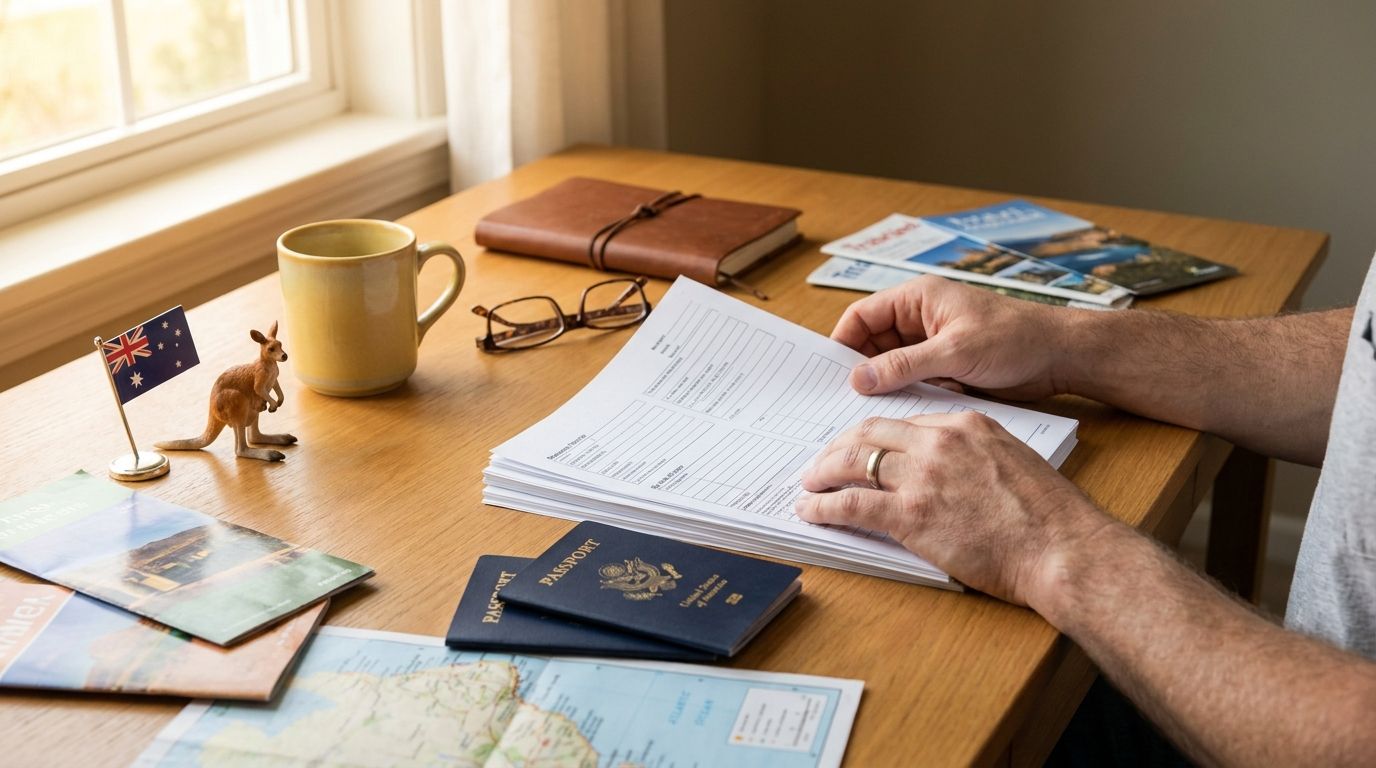
Australia does not offer one general "move here" visa for Americans. Your work, age, qualifications, family situation, savings, and employer all affect the available route. Rules change, so check the Australian Department of Home Affairs before paying for advice or making plans around a social media post.
Common routes include:
- Employer-sponsored visas, including the Skills in Demand visa, for workers with an eligible occupation and sponsoring employer.
- Skilled visas such as the Skilled Independent visa, Skilled Nominated visa, or Skilled Work Regional visa, which use points and occupation requirements.
- Student visas, which may allow limited work while you study, subject to current conditions.
- Partner and family visas for people with an eligible Australian partner or family connection.
- The Work and Holiday visa for eligible younger Americans who meet age, education, funds, and other conditions.
A tourist entry is not a relocation plan. It may let you inspect neighborhoods and attend permitted activities, but it does not give you permission to take a local job. Working without the right permission can affect later applications.
Your occupation may appear on a skilled occupation list, but that alone does not guarantee a visa. You may need a skills assessment, English evidence, an invitation, a health exam, a police certificate, proof of funds, or an employer willing to complete sponsorship steps. The order matters. A promising job search can stall if your visa does not support the role or the employer cannot sponsor you.
Before you build a moving date around Australia, write down:
1. The visa category you are researching.
2. The work rights attached to that category.
3. The documents you would need from the US.
4. The age, occupation, salary, health, and character conditions.
5. The backup plan if the first route does not work.
A licensed Australian migration professional can help when your case includes a partner, prior visa refusal, health issue, complex work history, or uncertain occupation match. You do not need to decide today that Australia is your forever country. You are allowed to investigate it honestly.
With SafeHavenGuide's country comparison tools, you can compare Australia against other countries using your budget, household details, safety preferences, and visa fit before you choose which rules deserve your time. The free six-question quiz at /preview returns three country matches and a cost figure, which gives you a starting point rather than a promise.
The money question: what does a comfortable month cost?
Australia can offer good wages, but a US salary does not automatically transfer into Australian buying power. Rent is often the largest shock. Sydney and Melbourne can be expensive, especially near central areas, beaches, and popular transit corridors. Brisbane and Perth are not cheap by default, and lower rent farther from work can quietly turn into higher transport costs.
A single person renting a modest one-bedroom apartment may need a monthly housing budget that ranges widely by city and neighborhood. A rough planning figure of AUD 2,000 to AUD 3,500 per month for rent may be realistic in many urban situations, but it is not a quote. Families, furnished rentals, short-term housing, and school zones can push that number much higher.
Build your first budget in Australian dollars, then convert it to US dollars. Exchange rates move, and your bank may charge fees that make a simple online conversion look kinder than the number on your statement.
Include these categories:
- Rent, bond, and temporary housing during arrival.
- Groceries, takeaway meals, and household supplies.
- Electricity, water, gas, internet, and mobile service.
- Public transport, car payments, fuel, registration, and insurance.
- Private health cover if your visa requires it or you choose it.
- Flights home, visa charges, document costs, and emergency savings.
Australia commonly uses a rental bond equal to several weeks of rent, with the exact amount governed by the state or territory. You may also need to pay rent in advance. That creates a painful first-month number before your new kitchen contains anything except one saucepan and a packet of cereal.
Healthcare needs its own line. Medicare access depends on your visa and circumstances, so do not assume that living in Australia means immediate access to the same public system as an Australian citizen or permanent resident. Some visas require health insurance. Others may offer limited access under a reciprocal arrangement, and the United States is not generally treated as a country with broad reciprocal Medicare access.
Taxes can also feel unfamiliar. Australia has its own tax system, while the United States generally continues to tax citizens on worldwide income. The foreign earned income exclusion, foreign tax credit, filing requirements, retirement accounts, and investments can make your situation more complicated. A US tax professional who works with Americans abroad can help you avoid treating a cross-border move like a normal change of address. (This is one of those costs people consistently underestimate until the first filing deadline.)
Your practical cost test is simple: price the city where you would actually work, the neighborhood where you would actually live, and the flight you would actually buy. Broad country averages are not enough.
Weather, weekends, and the life you would build
Weather is not decoration. It decides when you walk, exercise, cook, commute, and invite people over. Australia covers a large area, so "Australian weather" is not one thing.
Sydney has mild winters and warm summers, with coastal humidity and periods of heavy rain. Melbourne can bring four seasons in one day, which sounds charming until you leave home in a T-shirt and return wearing an improvised grocery-bag poncho. Brisbane has warm weather for much of the year and hot, humid summers. Perth is known for dry, sunny conditions, while Adelaide has hot summers and cooler winters.
Before choosing a city, look at more than average temperatures. Check:
- Heatwave frequency and overnight temperatures.
- Flood, bushfire, cyclone, or storm exposure in the specific area.
- Commute time during heavy rain or extreme heat.
- Access to shade, parks, beaches, pools, and indoor recreation.
- Whether your body and mood handle the local winter and summer pattern.
Weekend life is one of Australia's strongest draws for many Americans. You may have access to coastal walks, national parks, public gardens, sports clubs, farmers markets, libraries, and community events. The exact options depend on your city and transport. A beach 45 minutes away is not part of your weekly life if parking is awful and you work Saturdays.
Think in terms of repeatable weekends. Could you reach a trail without turning the outing into a military operation? Could you meet someone for coffee without crossing the entire city? Would you enjoy a local club, class, or volunteer group if you arrived without friends?
Families may need to look at school zones, childcare availability, commute patterns, and the cost of activities. Retirees may care more about healthcare access, public transport, home maintenance, and distance from family. Remote workers need to check whether their visa permits their work and whether the time difference affects US meetings.
A useful Australia relocation exercise is to create three sample weekends:
- A low-cost weekend when you are tired.
- A social weekend when you want to meet people.
- A family or visitor weekend when someone comes from the US.
Add realistic costs and travel times. If every good weekend requires a car, a long drive, and AUD 200, you have learned something useful before signing a lease.
What American expats wish they had tested earlier
The people who make a move abroad look effortless may simply be showing you the finished photo. They may not be showing the months of paperwork, the lonely supermarket trip, or the moment they realized a familiar US salary did not stretch as far as expected.
American expats in Australia often need time to adjust to the distance from home. Video calls help, but they do not replace sitting at a kitchen table with your sibling or showing up for a family emergency. You may miss ordinary things more than famous ones: a local diner, a familiar pharmacy, a child's school performance, or the ability to drive home in one afternoon.
That does not mean you should abandon the idea. It means you should include the emotional cost in the plan. Set a home-visit budget. Discuss how you will handle holidays. Decide who can help if you become sick or overwhelmed. If you are moving with a partner, talk about whose career gets priority during the first year and what happens if one person struggles more than expected.
Community takes effort at any age. Join something recurring rather than attending one large event and hoping friendship appears beside the snack table. A weekly class, sports group, parent group, professional association, or volunteer shift gives people a reason to see you again.
But Australia is not your only option. New Zealand may appeal to someone who wants outdoor access and a smaller population. Canada may make family visits easier for some Americans. Ireland can offer English-speaking life with shorter trips to Europe. The best choice depends on your household, not on which destination produces the most exciting photo.
Before you decide, save a shortlist with these details:
- Visa route and work permission.
- Monthly cost for your household.
- Two or three neighborhoods that fit your routine.
- Climate risks and seasonal comfort.
- Travel time and annual budget for visiting the US.
- One realistic way to meet people in the first month.
SafeHavenGuide lets you compare saved scenarios when your answer changes. You can test Australia for a single person, then compare it with a family budget or a remote-work plan. That kind of comparison is useful because your life is not a generic profile.
A grounded next step for your Australia someday
Do not begin with a flight search. Begin with a one-page Australia test.
Write down your likely city, work arrangement, visa route, monthly housing limit, weather preference, and visit-home budget. Then check current visa information from the Australian Department of Home Affairs and price five ordinary expenses in Australian dollars. Not the dream expenses. Rent, groceries, transport, mobile service, and one weekend outing.
After that, take the free match quiz at /preview and compare Australia with the other results. Download the free country pack for Australia if you want a longer checklist. You may confirm that Australia belongs on your serious shortlist. You may discover that the distance or cost changes the answer.
Both outcomes are progress.
A someday move does not need to become a public announcement. It can be a quiet Saturday morning, one honest budget, and a better question than "Could I picture myself there?" Ask whether you could build a Tuesday, pay the bills, find your people, and still have enough energy for the weekend.
That is the version of Australia worth testing.
FAQ
Is moving to Australia from the US difficult?
It can be demanding because Australia requires a valid visa, and each route has different work, age, skills, health, and document rules. The process becomes more manageable when you choose a likely visa category before planning housing or a move date.
Where do most American expats live in Australia?
Many American expats live in Sydney, Melbourne, Brisbane, Perth, or Adelaide because those cities offer major employment centers and established services. The right choice depends on your job, budget, climate preferences, transport needs, and tolerance for distance from the US.
Is Australia expensive for Americans?
Australia can be expensive, especially for rent, childcare, restaurant meals, and some services in major cities. Compare your expected salary and household costs in Australian dollars, then add visa fees, temporary housing, flights home, and exchange-rate changes.
Can a US citizen move to Australia and work?
A US citizen needs a visa that permits the intended work. Employer-sponsored, skilled, student, partner, and eligible Work and Holiday routes have different conditions, so check current requirements with the Australian Department of Home Affairs before accepting a job or working locally.
Join the conversation
Subscribe to comment
Join SafeHavenGuide's newsletter to leave a comment and get new posts in your inbox.