Portugal vs. Croatia for retirees: healthcare, cost, safety, and residency
Portugal offers a smoother retiree visa path, while Croatia can deliver lower costs and a quieter pace. Compare healthcare, safety, taxes, and daily life before you choose.
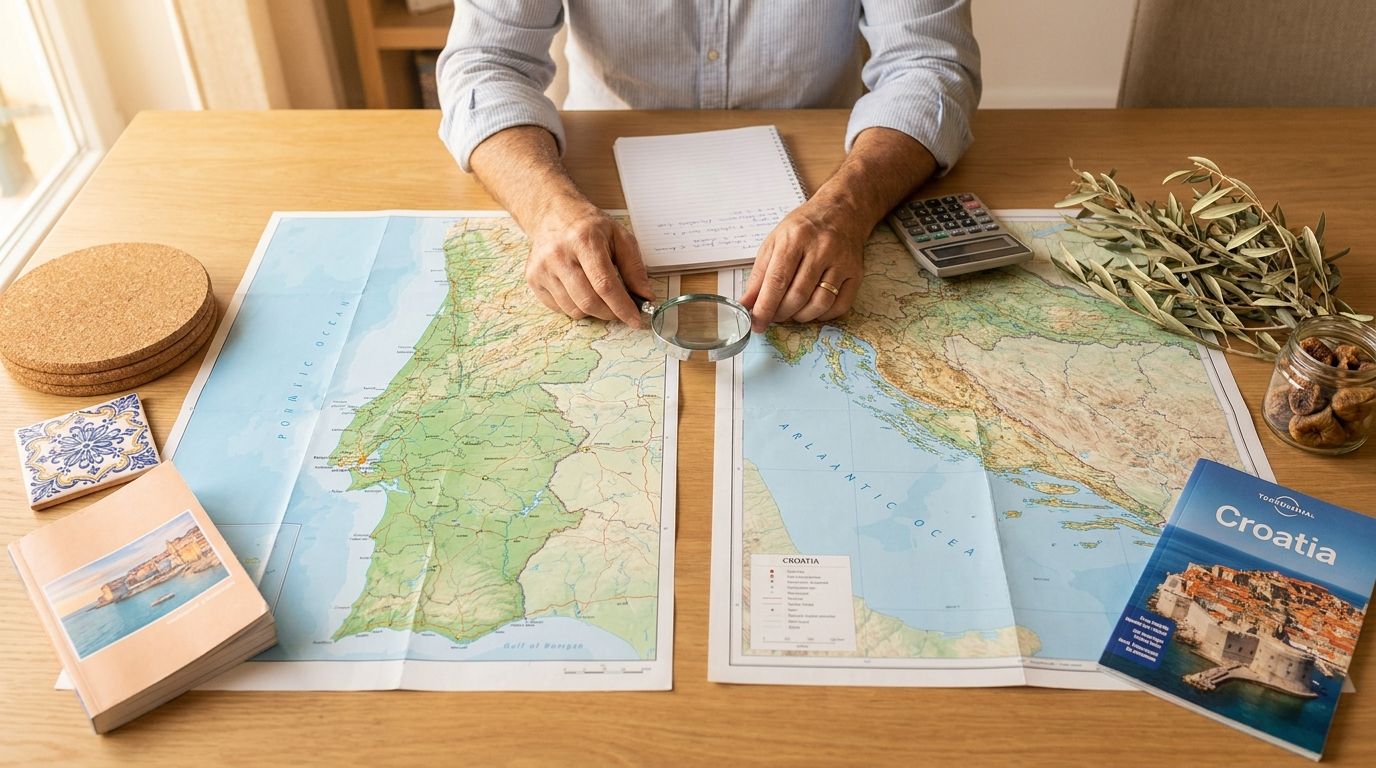
At 7:15 on a rainy Tuesday, you're at your kitchen table in Ohio, comparing a Portugal rental listing with a small apartment in coastal Croatia. The photos look easy. Your spreadsheet does not. For Portugal vs Croatia for retirees, the better choice depends on whether you value a clearer residency route and broader healthcare access or lower costs and a slower daily pace.
Portugal is usually the easier starting point for Americans who want a long-term retirement move. Croatia can be the better fit if you prefer a smaller country, lower housing costs outside the coast, and a less crowded feel. Both use the euro, sit inside the Schengen Area, and offer public healthcare systems, but neither country makes taxes, insurance, or residency automatic.

Portugal vs Croatia for retirees at a glance
Portugal has a well-known retirement residency route called the D7 visa, designed for people who can support themselves through pension income, investments, or other regular funds. You normally apply through the Portuguese consular process in the United States, then complete the residence process after arrival. Requirements and appointment procedures can change, so check the current instructions from the Portuguese consulate and AIMA, Portugal's immigration agency.
Croatia has residence options for people who are not working locally, but the route is less commonly used by American retirees as a straightforward retirement visa. You may need to apply for temporary residence based on a permitted purpose, show sufficient funds, provide housing evidence, and prove health coverage. The local police administration or Croatian consulate will tell you which basis applies to your situation.
Here is the short comparison:
- Portugal generally has the clearer retirement planning path.
- Croatia can cost less when you live away from Dubrovnik and central Split.
- Portugal has more established private healthcare options for foreign residents.
- Croatia offers a smaller population and a calmer feel in many inland towns.
- Both countries require careful planning for tax residence and health insurance.
Consider the difference between two realistic plans. David and Karen want a two-bedroom apartment, regular flights to the United States, and access to English-speaking private clinics. Portugal probably reduces their friction. Linda, on the other hand, wants a modest one-bedroom home, cooks most meals, and plans to spend summers near Zadar while living inland in winter. Croatia may stretch her income further.
Neither country is a universal answer. Your budget, medical needs, preferred weather, and tolerance for paperwork matter more than a retirement ranking on a website.
Healthcare in Portugal and Croatia
Portugal's public system, the Serviço Nacional de Saúde, serves residents through health centers and hospitals. Once you hold legal residence and complete the required registration, you can seek access to the public system. You may need a Portuguese tax number, residence documents, and local registration before the process works smoothly, so ask the local health center what it requires in your municipality.
Portugal also has a large private healthcare sector. Lisbon, Porto, Braga, and the Algarve have private hospitals and clinics with doctors who often speak English. Private consultations commonly cost far less than comparable US appointments, though prices vary by specialty and provider. A basic private health plan may help with routine appointments, but check hospital networks, age limits, waiting periods, and exclusions for existing conditions.
Croatia has a public system run through the Croatian Health Insurance Fund, known as HZZO. People with approved residence may need to enroll or show another accepted form of coverage. Croatia has hospitals in Zagreb, Split, Rijeka, and Osijek, while smaller islands and inland towns may have fewer specialists. You may need to travel for complex treatment.
The OECD's Health at a Glance: Europe 2024 report compares health systems across Europe and shows why national averages do not answer your personal question. Access, staffing, waiting times, and specialist availability can differ sharply between a capital city and a rural district.
Before you choose, check these details:
- Which hospital handles your current heart, eye, or mobility needs?
- Does your insurance cover treatment during the residence application period?
- Can you reach a specialist without a three-hour drive or ferry trip?
- Will your US prescriptions have an equivalent local name and dose?
Portugal may suit you better if you expect regular specialist care and want several private providers nearby. Croatia may work well if you are healthy, flexible about location, and willing to travel to a larger city for treatment. Get written answers from insurers and clinics. A friendly phone conversation is useful, but it is not a coverage document.
Retirement abroad cost comparison: Portugal or Croatia
The biggest cost difference is usually housing. Lisbon, Cascais, Porto, and much of the Algarve can be expensive compared with inland Portugal. Croatia's coastal areas also spike in price during tourist season, particularly in Dubrovnik, Split, Hvar, and parts of Istria.
For planning purposes, a couple renting a modest two-bedroom home might estimate these monthly ranges before flights and major medical expenses:
- Inland Portugal: about €1,700 to €2,600 for rent, utilities, groceries, transit, and routine spending.
- Porto or a smaller Algarve city: about €2,100 to €3,300, depending heavily on housing.
- Inland Croatia: about €1,500 to €2,400 for the same broad categories.
- Split, Dubrovnik, or a popular island: about €2,000 to €3,500, with seasonal rent creating the biggest swing.
These are planning ranges, not official national averages. A furnished rental near the water can change the entire calculation. So can a car, private insurance, frequent US flights, or regular restaurant meals.
Consider Michael and Susan, who receive $4,800 a month after tax. They want a two-bedroom apartment, one car, private health coverage, and two visits to family in North Carolina each year. A winter rental in inland Croatia may give them more room for travel. A smaller Portuguese city may offer a better mix of healthcare access and direct transport, even if rent costs more.
Then consider Robert, who has $3,100 a month and no car. He may find central Lisbon unrealistic, but he could compare Coimbra, Viseu, or smaller northern cities in Portugal. In Croatia, he could compare Zagreb's outskirts, Karlovac, or inland Istria instead of starting with a coastal postcard town.
Build your estimate around your real household profile:
- Rent with a realistic deposit and possible agency fee.
- Utilities, mobile service, internet, and winter heating.
- Groceries, local transport, car ownership, and fuel.
- Private insurance, prescriptions, flights, and a reserve for repairs.
Use euros for the local budget, then add a dollar-to-euro exchange cushion. A 5 percent currency swing can matter when your income is fixed. SafeHavenGuide's country cost comparison can help you test the same household profile against both countries rather than relying on a generic expat budget.
Safety and everyday life
Both Portugal and Croatia are generally viewed as safe destinations for American residents. The US Department of State lists both countries at Level 1, which means travelers should exercise normal precautions. That label does not tell you whether your future neighborhood has poor lighting, tourist-season theft, difficult parking, or a long drive to emergency care.
Portugal's larger cities require ordinary urban awareness. Pickpocketing and bag theft can occur around busy transit areas and tourist zones. In the Algarve, seasonal crowds can change traffic and rental availability. Inland towns are often quieter, but a quiet place may also have fewer English-speaking services.
Croatia has low levels of violent crime by international standards, but tourist areas bring the same practical risks found across Europe. Coastal roads can become congested in summer. Older buildings may have steep stairs, limited elevators, or heating systems that feel very different from what you used in the United States.
Safety for retirement also means practical resilience. Ask how quickly you can reach a pharmacy, grocery store, bank, clinic, and airport. Walk the neighborhood after dark. Visit during the season when you plan to live there, not only during the month when the weather looks perfect.
Your daily safety check should include:
- Street lighting and sidewalks between your home and basic errands.
- Flood, fire, storm, or earthquake exposure in the exact area.
- Emergency response and hospital access.
- Theft risk around transit stops, beaches, and seasonal rental zones.
Croatia has earthquake history around Zagreb and other regions, so inspect buildings and ask about repairs. Portugal has wildfire risk in some inland and northern areas, especially during hot, dry periods. Neither fact should end your search, but both belong in your insurance and housing questions.
A retired couple who feels safe in a walkable Portuguese neighborhood may feel less comfortable in a beautiful Croatian village that requires a car for every appointment. The reverse can also be true. Safety is partly the country and partly the routine you can maintain there.
Residency, taxes, and the paperwork gap
For many Americans, residency is the deciding factor in the Portugal vs Croatia for retirees comparison. Portugal's D7 route gives eligible applicants a familiar structure: show a place to live, prove sufficient recurring income or funds, provide a clean criminal record, and meet health coverage and document requirements. The exact income threshold can change and may depend on household size, so confirm the current amount before you prepare your file.
The D7 is not a promise of approval. You may need an FBI background check with an apostille, certified translations, bank statements, proof of accommodation, and evidence of insurance. Processing times vary. After arrival, you may face appointments and registration steps with AIMA and local authorities.
Croatia's process can be more dependent on the residence purpose you use and the office handling your application. Do not assume that buying property creates a retirement residence right. It generally does not. You need a valid legal basis, proof of funds, housing evidence, health coverage, and any documents requested by Croatian authorities.
Both countries can create tax residence when you spend enough time there or establish your main home there. The United States taxes citizens on worldwide income, while the country where you live may also tax pension, investment, or rental income. The US has income tax treaties with Portugal and Croatia, but treaty treatment depends on income type and your specific facts.
Portugal's former non-habitual resident tax regime changed for new applicants, and retirees should not use old internet articles to plan their taxes. Croatia also has its own rules for residents, pension income, and foreign-source income. Speak with a US tax professional who handles Americans abroad and a local adviser before you sign a lease or transfer a large account.
Create a document folder containing:
- Passport copies, birth and marriage records, and the FBI check.
- Apostilles and certified translations where required.
- Pension letters, bank statements, and investment evidence.
- Insurance records, lease documents, and tax identification numbers.
Paperwork is boring until one missing page delays your move by six months. Then it becomes the entire plot.
Where to live in each country
Portugal gives you more city choices for a retirement search. Lisbon has the widest service range but the highest housing pressure among the places most Americans consider. Porto offers strong transit and healthcare access, though rain and hills can affect your routine. Braga and Coimbra may offer a calmer pace with lower costs than Lisbon. The Algarve has familiar expat networks and mild winters, but some towns become crowded and costly during high season.
Croatia's choices feel more concentrated. Zagreb offers the broadest medical and cultural access, but it is inland and has cold winters. Rijeka combines city services with coastal access. Split has a warm climate and an airport, yet housing prices and tourist pressure can be significant. Zadar may appeal if you want a smaller coastal city, while Osijek or Karlovac can offer lower costs and a more local routine.
Don't choose by country alone. Compare neighborhoods using a normal Tuesday test:
- Can you buy groceries without a car?
- Can you reach your doctor by public transit?
- Is the apartment comfortable in January and August?
- Can you manage stairs, humidity, noise, and street surfaces?
Rent before buying. Stay for six to eight weeks if your budget permits, and include at least one month outside the tourist season. Speak with a pharmacist, a property manager, and an American who has lived there long enough to handle a tax form. Vacation impressions are useful, but they are not a residency plan.
If you are choosing between Portugal and Croatia because of a partner's preference, divide the trial stay into ordinary tasks. One person handles a grocery run and a clinic appointment. The other checks a rental, opens a phone plan, and rides local transit. You will learn more from those errands than from another sunset dinner.
Which country fits your retirement plan?
Portugal is often the stronger choice when you want a clearer retirement visa route, a large private healthcare market, and more established support for English-speaking newcomers. It may suit you if you have regular pension income, need reliable access to specialists, or want several cities to compare before settling.
Croatia may suit you when lower costs matter more than a simple visa narrative, when you prefer a smaller country, or when coastal and inland living both appeal to you. It can be a good match for a retiree who is comfortable checking residence rules with local authorities and traveling to a regional city for complex healthcare.
Use this decision filter:
- Choose Portugal if residency clarity is your top concern.
- Choose Croatia if a smaller setting and lower non-coastal costs matter most.
- Choose Portugal if you need many private medical providers nearby.
- Choose Croatia if you want coastal access without living in the largest expat hubs.
Then run the same numbers through both options. Include rent, insurance, taxes, flights, transport, and a six-month emergency reserve. Take the free SafeHavenGuide country match quiz if you want a starting comparison with a cost figure and three country results. You can also download a free starter pack for Portugal or Croatia.
The best countries to retire abroad are not the ones with the prettiest ranking. They are the ones where your money, medical needs, paperwork, and ordinary Tuesday routine can work together.
FAQ
Is Portugal or Croatia cheaper for American retirees?
Croatia can be cheaper outside Dubrovnik, Split, and the most popular islands. Portugal can be more expensive in Lisbon, Cascais, Porto, and parts of the Algarve, but inland cities may narrow the gap. Your rent, car use, insurance, and travel schedule matter more than the country label.
Is Portugal easier for Americans to retire in?
Portugal is often easier to plan because the D7 route is widely used by financially independent applicants. You still need current requirements, document preparation, health coverage, and an immigration appointment. Croatia has residence options, but the correct legal basis can be less obvious for a retiree who is not working locally.
Can American retirees use public healthcare in Portugal or Croatia?
Legal residents may qualify for access to the public system after completing the required registrations. You may need private insurance during the application period or while waiting for local enrollment. Check specialist access, prescription rules, and coverage for existing conditions before you move.
Do I pay US taxes if I retire in Portugal or Croatia?
US citizens generally continue to file US tax returns on worldwide income. You may also have tax duties in Portugal or Croatia if you become tax resident there. A cross-border tax professional should review your pension, Social Security, investments, property, and expected days in each country.
Should I rent or buy before moving abroad?
Rent first. A six-to-eight-week trial stay can reveal noise, heating, transport, medical access, and seasonal price changes that a property tour hides. Buying property does not automatically give you the right to reside in Portugal or Croatia.
Before you decide, make two one-page plans: one for Portugal and one for Croatia. Put your likely monthly cost, visa route, nearest hospital, tax questions, and trial-stay dates on each page. The weaker plan will usually reveal itself before you spend money on a flight or an application.
Join the conversation
Subscribe to comment
Join SafeHavenGuide's newsletter to leave a comment and get new posts in your inbox.