
Moving to Ireland as an American: lifestyle, housing, healthcare, and visa questions
Thinking about moving to Ireland from the US? Get a practical look at housing, healthcare, visas, taxes, and the everyday cost of starting over.

At 7:15 on a wet Tuesday morning, you're standing in a Dublin kitchen, waiting for the kettle while a letting agent's email sits open on your phone. The apartment is €2,300 a month, the bus route looks workable, and the rain is doing exactly what the postcards promised.
Moving to Ireland from the US can work well if you want English-speaking daily life, strong public services, and easy access to Europe. It becomes much harder when you treat a three-month visit as proof that you can afford housing, qualify for residence, and manage healthcare there.
This Ireland expat guide gives you the practical version. Ireland may fit your life, but your visa route, housing budget, healthcare plan, and tax position need to fit together before you buy a one-way ticket.
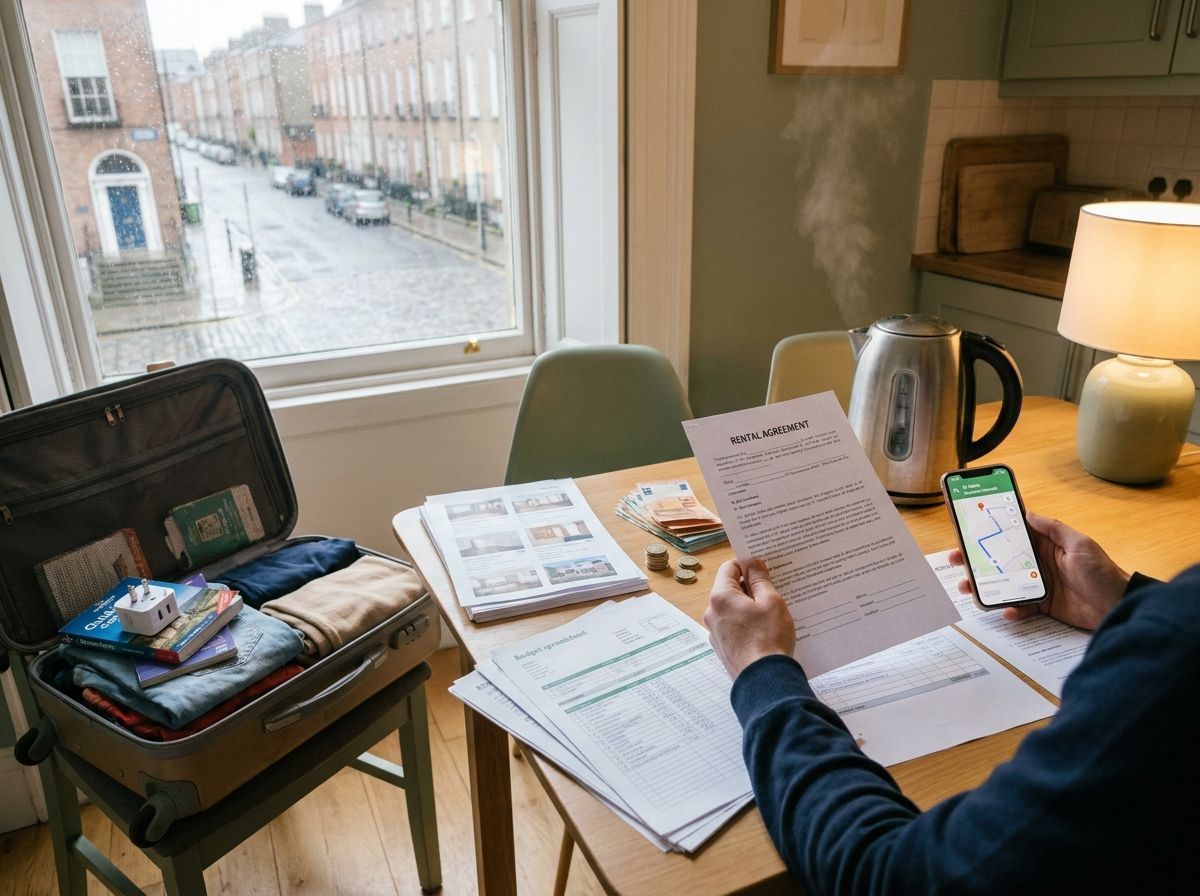
What everyday life in Ireland feels like
Ireland is socially familiar to most Americans, but it is not simply the United States with roundabouts. English is the main language. Shops, schools, government services, and medical offices are generally accessible without translation. Irish Gaelic appears on road signs and in official settings, yet you can handle ordinary errands in English.
The pace can feel less rushed than in many US cities. A short conversation with a shopkeeper may take longer than expected. Appointments and repairs may not happen on the schedule you were given. That can be charming until your washing machine has been broken for nine days and your landlord says someone is "having a look."
Dublin offers the largest job market, more direct flights, and the widest range of international services. Cork has a smaller urban feel and technology, pharmaceutical, and university employers. Galway suits people who want a compact city near the coast, though its rental supply is tight. Limerick can offer lower housing costs than Dublin, but your employment options and commute deserve a close check.
Ireland's weather is mild rather than reliably sunny. Dublin's average annual rainfall is far lower than some western counties, while Galway and the Atlantic coast receive more frequent rain and wind. You will probably spend more time outdoors than you expect, but you may also own three versions of the same waterproof jacket.
A normal week might include a local café, a grocery shop at Tesco or SuperValu, a walk along the coast, and a long drive to visit family or friends. Public transport is useful in Dublin and less dependable in rural areas. If your plan depends on commuting from a village to a city every day, test the route at the actual hour you would travel.
Who tends to like the adjustment?
Ireland may suit you if you value:
- English-speaking services and familiar social customs
- A smaller country with short trips between cities and towns
- Public healthcare access alongside optional private coverage
- A cooler climate and less car-dependent life in some urban areas
- Easy travel to the United Kingdom and mainland Europe
It may frustrate you if you need a large suburban home, guaranteed sunshine, very fast administration, or a job that permits you to work from Ireland without immigration approval.
Housing is usually the hardest part
The cost of living in Ireland is shaped heavily by rent. Housing shortages affect Dublin and other university and employment centers, so a salary that looks comfortable on paper can feel stretched after rent, utilities, transport, and childcare.
Daft.ie rental reports have placed the average advertised rent for a two-bedroom home in Dublin well above €2,000 per month in recent reporting, with newer listings often higher. Prices shift quickly by neighborhood and property condition. A two-bedroom apartment in central Dublin, a terrace in a commuter town, and a house in County Mayo are not interchangeable budget items.
For a rough planning exercise, a single person renting a room in a shared Dublin home may spend €1,700 to €2,600 per month before savings and major travel. A couple renting a one-bedroom or small two-bedroom apartment may need €3,300 to €4,800 for ordinary monthly spending, depending on rent and transport. A family with two children can pass €5,500 quickly once rent, childcare, groceries, utilities, and school costs are included.
Those are planning ranges, not promises. Build your own estimate with these lines:
- Rent and deposit, including the possibility of temporary housing
- Electricity, heating, internet, mobile service, and waste charges
- Groceries, lunches, and occasional meals out
- Public transport, car costs, insurance, and fuel
- Health insurance, prescriptions, dental care, and appointments
- Childcare, school supplies, pet care, and return flights to the US
Consider a couple moving from Raleigh to Cork with one remote salary. They find a €1,850 apartment, but the move-in cost also includes a deposit, short-term lodging, furniture, and several weeks without normal income. Their monthly budget works only because they planned for the arrival month separately, as its own financial event.
Ask for a written lease. Confirm whether heating is electric, gas, or included. Check broadband availability at the exact address. Search the Residential Tenancies Board for current tenant information, and never transfer money for a property you have not verified through a legitimate letting process.
Buying is not a shortcut around the housing problem. You can buy property in Ireland as an American, but ownership does not grant residence. Mortgage approval, local income, taxes, and proof of funds can also be harder before you establish Irish financial history.
Visa questions Americans need to answer
US citizens can generally visit Ireland without a visa for up to 90 days, subject to border approval. That permission is for visiting. It does not allow you to move permanently, take an Irish job, or assume that a remote US job is automatically permitted.
For stays longer than 90 days, you need an immigration route that matches what you will do there. Common routes include employment permits, study permission, family-based residence, and certain financially independent or retirement-style permissions. Ireland does not offer one universal retirement visa that works for every American applicant.
An employment route usually starts with an Irish job offer and the correct employment permit. The Critical Skills Employment Permit covers specified occupations and salary conditions, while the General Employment Permit covers other eligible roles with different rules. Your employer, occupation, salary, and nationality do not answer the question by themselves. The exact permit category does.
A Stamp 0 permission may apply to some people with independent means, but it has conditions around income, private medical insurance, and work. It is not a casual workaround for someone who wants to arrive and search for a job. Student permission can allow limited work under its own rules, but tuition and living expenses still need a realistic plan.
Before you apply, identify:
- The activity that gives you the right to reside
- Whether you need permission before arrival or registration after arrival
- The financial evidence the route accepts
- Health insurance and accommodation requirements
- Whether your spouse, partner, or children qualify to join you
- Any limits on employment, self-employment, or remote work
The Irish Immigration Service and Citizens Information are the places to check current rules. Requirements can change, and an online forum from 2021 is not a legal plan. Allow time for police certificates, birth and marriage records, apostilles where required, certified copies, and registration appointments.
If your plan is "I will enter as a tourist and sort it out," pause there. A border officer can ask about your purpose, funds, accommodation, and return plans. A tourist entry does not create a path to long-term residence.
Healthcare: public access and private cover
Ireland has a public healthcare system, but it does not work exactly like the NHS in the United Kingdom or Medicare in the United States. The Health Service Executive, usually called the HSE, provides public services. Access, eligibility, waiting times, and fees vary by service and by your residence status.
You normally begin with a general practitioner, or GP. GP visits are often paid privately unless you qualify for a medical card or GP visit card. A standard appointment can cost roughly €50 to €75, although fees vary. Prescriptions may involve charges, and dental care often has separate costs.
A medical card is generally based on income and circumstances. A GP visit card covers GP appointments but not every other medical expense. Do not assume that an American salary, pension, or investment income will be treated the way it was in the US. Check the HSE assessment rules using your expected Irish household income.
Private insurance can help with hospital access and some accommodation or specialist costs, but it does not replace immigration permission. Some residence routes require private health insurance from the start. Ask whether a policy covers pre-existing conditions, outpatient treatment, emergency care, prescriptions, and repatriation if that matters to you.
Sort out a healthcare setup before departure:
- Bring a medication list using generic drug names
- Carry enough prescribed medication for the transition period
- Ask your US clinician for records and current prescriptions
- Find out whether your medication is available in Ireland
- Budget for GP visits, dental care, glasses, and specialist appointments
- Buy required private insurance before the date your permission begins
Say someone leaves Phoenix for Galway with diabetes medication and assumes their US pharmacy can transfer everything. That assumption can create a genuinely stressful first month. They need records, an Irish GP, and a supply plan before the medication runs low.
For emergencies, call 112 or 999. For ordinary care, plan around a GP rather than expecting an urgent-care clinic on every corner. Families with children should ask nearby practices whether they are accepting new patients before signing a lease.
Work, taxes, banking, and the real monthly budget
Ireland hosts major employers in technology, pharmaceuticals, finance, medical devices, and professional services. Dublin has the broadest range of roles, but Cork, Galway, Limerick, and Waterford also have substantial employers. A job title that transfers well from the US may still require an employment permit or professional registration.
Remote work needs special attention. Your US employer may need an Irish payroll setup, an Irish entity, or a compliant employment arrangement. Your immigration permission may also limit the work you can perform. Get written advice from your employer and a cross-border tax professional before you work from a kitchen table in Kildare for six months.
Irish tax residence often depends on the number of days you spend in Ireland. Revenue generally uses a 183-day test in one tax year or a 280-day test across two years, subject to the rules and exceptions that apply to your situation. The United States taxes citizens on worldwide income, so moving does not end your US filing duties.
You may need to review the foreign earned income exclusion, foreign tax credit, FBAR reporting, and the US-Ireland tax treaty. These rules depend on your income and accounts. A US tax preparer who has never handled an overseas move may not be enough. Not even close, in some cases.
Your Irish budget should include costs Americans often leave out:
- USC and income tax effects on Irish earnings
- PRSI and employer payroll deductions
- Annual car insurance, motor tax, and vehicle inspection costs
- Heating bills during colder months
- School contributions, uniforms, and activities
- Flights home, especially during holidays
- Currency conversion fees and transfer delays
A €70,000 Irish salary is not the same as a €70,000 US salary. Compare take-home pay, rent, healthcare, childcare, and commuting rather than comparing gross numbers. If you receive a pension, Social Security, dividends, or rental income, include each stream in the tax discussion.
Open an Irish bank account when your residence and identification documents allow it, but keep a US account for obligations at home. Save copies of every transfer, tax form, lease, and immigration letter. Future-you will be grateful, although future-you will still dislike filing season.
Choosing a place to live
Pick a location based on your ordinary Tuesday, not your best holiday Saturday. Dublin's neighborhoods have different rents, transport links, schools, and noise levels. County towns may offer more space, but a car can become necessary and social life may take more work.
Dublin 2 and Dublin 4 are close to offices and cultural venues, yet rents are high. Rathmines, Drumcondra, Clontarf, and parts of South Dublin can offer different mixes of transport and housing, though each street needs its own check. Do not choose a neighborhood from a map alone. Walk from the property to the bus stop at the hour you would commute.
Cork can appeal to people who want city services without Dublin's scale. Galway has a strong university and arts presence, but housing competition can be fierce. Limerick may work for a household connected to the university, hospital, or technology sector. Smaller counties can offer space and lower rent, but jobs, schools, and healthcare access may be less convenient.
Use a simple location test:
- Can you reach work or school in a normal commute?
- Can you find a GP, pharmacy, grocery shop, and bank nearby?
- Do you need a car for every basic errand?
- What happens to your budget if rent rises at renewal?
- How will you meet people outside work?
- Is the home dry, insulated, and affordable to heat?
For a family, school enrollment and childcare may decide the location before scenery does. For a retiree, a village with one bus a day may feel peaceful until a hospital appointment requires a taxi and a long wait. For a younger professional, living farther out may save rent but erase the social life that attracted them to Ireland.
Rent a short-term place for four to eight weeks if your budget allows. Use that time to inspect homes, test routes, and notice the details online listings hide: damp corners, weak heating, thin walls, and buses that are more theoretical than punctual.
How to decide whether Ireland fits your move
Ireland deserves a serious look when your plan has a legal route, a housing budget with room for surprises, and a healthcare plan that does not depend on luck. The country can offer community, access to Europe, and a familiar language, but housing pressure and taxes can change the answer for your household.
Write down your non-negotiables. A retiree may need reliable medical access and a low-maintenance home. A parent may need school and childcare information. A remote worker may need permission to work, stable internet, and advice on payroll. A couple may care most about rent, public transport, and whether both people can work legally.
Then compare Ireland with at least two alternatives using the same figures. SafeHavenGuide's country match quiz asks six questions, returns three country matches with a cost figure, and lets you start without signing up at /preview. Use it as an early comparison, not a substitute for immigration advice.
A practical Ireland decision file should contain:
- Your monthly budget in euros and dollars
- Your likely visa or residence route
- A list of eligible jobs or proof of independent income
- Housing searches in three locations
- Private health insurance quotes
- A US and Irish tax question list
- A 90-day arrival plan with temporary housing
If the plan only works when rent is unusually low, flights are never needed, and your visa is approved without delay, it is not ready. Adjust the location, income, timing, or destination. Permission to change your mind is part of relocation planning.
FAQ
Can Americans move to Ireland without a visa?
Americans can generally visit Ireland for up to 90 days without obtaining a visitor visa in advance. That does not permit permanent residence or ordinary employment. For a longer stay, you need an appropriate immigration permission and may need to register after arrival.
What is the cost of living in Ireland for an American couple?
A couple renting in or near a major city may need roughly €3,300 to €4,800 per month for rent and ordinary spending, before large savings goals or frequent US flights. Dublin can run higher, while smaller cities may reduce rent but increase car or commuting costs. Build a budget from actual listings rather than a national average.
Is healthcare free in Ireland?
Ireland has public healthcare, but many residents pay for GP visits, prescriptions, dental care, and some other services. Medical cards and GP visit cards are means-tested or based on circumstances. Private insurance may be required for some immigration permissions and can reduce certain waiting or hospital costs.
Can an American work remotely from Ireland?
Not automatically. Your immigration permission, employer's payroll obligations, Irish tax residence, and US filing duties all need review. Get advice before working from Ireland for a US company, even if the company has no Irish office.
Can buying a home in Ireland give an American residency?
No. Americans can purchase Irish property subject to normal legal and financial requirements, but ownership does not grant immigration permission. You still need a residence route that matches your work, study, family, or financial circumstances.
Before booking the flight, spend one evening building the decision file: choose three Irish locations, price five real rentals, identify your residence route, and estimate your first 90 days. If those numbers still work, download a free country pack at /free/ireland and move from a pleasant idea to a testable plan.
Join the conversation
Subscribe to comment
Join SafeHavenGuide's newsletter to leave a comment and get new posts in your inbox.