Moving to France from the US: Could everyday life in Lyon fit your budget?
Lyon can offer French city life without Paris prices, but rent, visa income rules, taxes, and daily habits decide whether the move works.

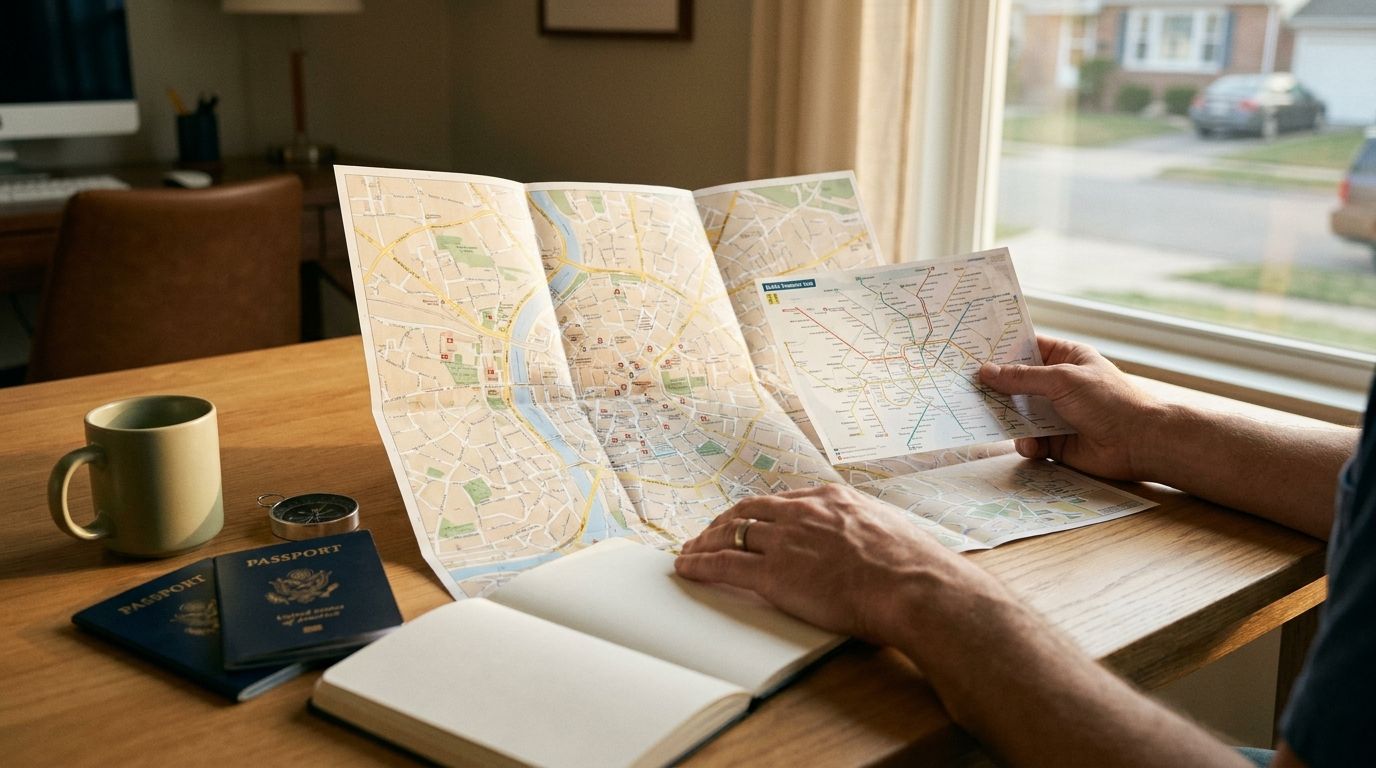
At 7:12 on a rainy Tuesday, Maya Camp opens a spreadsheet beside her cooling coffee and types "Lyon monthly budget" into the top row. She has a rent estimate, a salary number, and one stubborn question: could living in Lyon as an American feel comfortable without turning every grocery run into a small financial emergency?
Moving to France from the US can fit a moderate relocation budget, especially outside central Paris. Lyon often offers a more manageable mix of rent, public transit, food, and city life, but your result depends on housing, visa income rules, taxes, healthcare, and how much space you actually need.

That is the part people skip when they fall for France. They picture a market bag, old stone buildings, a long lunch. Fair enough. Then they forget the security deposit, the translated birth certificate, the apartment guarantor, and the fact that a charming fifth-floor flat may come with stairs that treat weekly groceries as a personal challenge.
What Lyon can offer your everyday budget
Lyon is France's third-largest city, after Paris and Marseille, with a population of more than 500,000 within the city itself and a much larger metropolitan area. It has a serious local economy, universities, hospitals, restaurants, and rail connections. You can build a full routine there without relying on the city to entertain you every weekend.
That matters for a move abroad. You are not budgeting for a two-week visit. You are budgeting for Tuesday night when you need detergent, a prescription, a quiet meal, and a way home after the last train.
The city has several distinct areas. Presqu'île puts you close to shops, restaurants, and major transit, though central apartments cost more. Croix-Rousse has a strong neighborhood feel and steep streets. Part-Dieu is practical for rail access and work commutes. Areas farther from the center can reduce rent, but they add time and transport costs.
A rough monthly estimate for one adult in Lyon might look like this:
- Rent for a modest one-bedroom apartment: about €750 to €1,200, depending on location, condition, and size.
- Utilities, internet, and mobile service: about €130 to €220.
- Groceries and household supplies: about €300 to €450.
- Public transportation: often around €70 to €75 for an adult monthly pass in the Lyon transit area, with prices subject to change.
- Health, personal spending, eating out, and local activities: about €250 to €500.
That places a practical single-person monthly budget somewhere around €1,500 to €2,400 before income tax, private insurance choices, travel, debt payments, or major savings goals. A couple may need roughly €2,500 to €3,600 before rent changes, depending on whether both people work and how often they eat out.
Those figures are planning ranges, not promises. French rent listings may exclude some charges. Electricity can vary with heating. An unfurnished apartment may carry a lower headline price than a furnished one, but buying basic household items after arrival can erase that difference for months.
France cost of living estimates also look different when you compare habits rather than prices. A weekly market may help you spend less on seasonal produce, but imported American snacks can be startlingly expensive. A transit pass may replace a car entirely, but a suburban commute can make a vehicle feel necessary again.
Where your Lyon budget can change quickly
Before you compare Lyon with your current US city, write down the costs that actually shape your month:
- Your maximum rent, including building charges and utilities.
- Whether you need a car, parking, or regular trips outside the city.
- Your expected tax burden and health insurance costs.
- The amount you want to save each month.
- Your first-year setup costs, including deposits, documents, furnishings, and travel.
This is not pessimism. It is permission to make the dream less fragile.
Rent is usually the decision that makes or breaks the plan
Housing deserves more attention than the pretty apartment photos. French landlords often ask for proof of income, tax documents, identification, and evidence that you can pay. Some ask for a guarantor. As an American arriving without French payslips or a local banking history, you may face more questions than a local applicant.
The move-in bill can also arrive all at once. You may pay a security deposit, the first month's rent, agency fees, insurance, and sometimes extra costs tied to the apartment. For an unfurnished rental, the deposit is commonly capped at one month's rent excluding charges. For furnished rentals, it can reach two months, though exact rules depend on the rental arrangement.
A €950 apartment does not always mean you need €950 to get the keys. A safer arrival fund might cover several months of rent plus setup costs, particularly if your income begins after you arrive.
Look at the apartment's total monthly cost, not just the headline rent. Ask about:
- Building charges and what they include.
- Heating type and recent energy costs.
- Internet availability.
- Furnished or unfurnished status.
- Energy performance information.
- Distance to a tram, metro, or reliable bus route.
- Whether the building has an elevator.
And ask whether the neighborhood actually works at the hour you will use it. A place can feel calm at noon and inconvenient at 9:30 p.m. The walk from the station matters more than the café you bookmarked from back home.
A smaller apartment near transit may serve you better than a larger one far out. That trade protects both money and energy, especially during your first year when every routine still takes extra thought.
Families need another pass through the numbers. A two-bedroom apartment in a well-connected area may push rent above €1,300, while childcare, school meals, activities, and flights home to the US add their own weight. Public schools do not automatically make family relocation free. You still need to understand enrollment rules, language expectations, school calendars, and the real cost of settling children into a new place.
Retirees may care less about commuting but more about elevator access, medical appointments, supplemental coverage, and a quiet home with dependable heating. A low rent is not useful if the apartment makes ordinary errands exhausting.
Your visa and tax situation changes the math
A tourist stay is not a relocation plan. US citizens can generally visit the Schengen Area for up to 90 days in any 180-day period without a short-stay visa for permitted travel, but living in France longer than that usually requires the right long-stay permission.
Common routes can include a visitor visa, an employee route, a talent or business route, a student route, or a family-based option. The right path depends on your work, income, family situation, purpose, and time in France. A visitor route may allow residence without local employment, but it usually requires proof of funds and may not permit you to work in France.
Income rules are not one universal number for every applicant. French authorities can assess regular income, savings, housing, health coverage, and the details of your application. Check the France-Visas portal and the French consulate responsible for your US residence before you build a budget around a figure you half-remember from a forum post.
Your visa file may require documents such as:
- A valid passport and application forms.
- Proof of housing or an address plan.
- Bank statements, pension records, employment evidence, or other income proof.
- Health insurance documents when required.
- Birth, marriage, or family records where relevant.
- Certified translations, apostilles, or legalizations for certain documents.
The US-France tax question also needs professional attention. France and the United States tax residents under different systems, and US citizens generally continue to have US filing duties even while living abroad. Foreign earned income rules, tax credits, investment income, pensions, business income, and state tax ties can produce very different results depending on your situation.
Do not treat a monthly gross salary as your spending money. Ask a cross-border tax professional to model your likely net income, French taxes, US filing obligations, health contributions, and retirement effects before you sign a lease.
SafeHavenGuide's country match quiz can help you compare the budget fit of France with other destinations, but it cannot replace visa or tax advice. Use the six-question preview at `/preview` to see three possible country matches and a cost figure, then test Lyon with your own household numbers rather than a generic expat profile.
What living in Lyon as an American may feel like
The budget question is real, but it is not the whole question. You may be able to afford Lyon and still dislike the pace, the paperwork, the housing hunt, or the language barrier. You may also find that the parts you feared become manageable once you have a routine.
French city life can feel more compact than life in many US metro areas. You may walk for errands, use transit for work, and buy smaller amounts of food more often. Apartments tend to have less storage. Shops may close at times that feel strange until you stop expecting every place to run on your schedule.
Language affects cost as well as belonging. If you cannot handle a rental call, a pharmacy question, or a government form in French, you may pay for help or simply lose time. You do not need perfect French before moving. You do need a plan to keep learning, especially if you want connections outside an English-speaking circle.
Maya's budget has a line for French lessons, but the more useful line is "awkward conversations." It covers the emotional cost of asking someone to repeat a sentence, making a mistake at the bakery, or explaining a document when your vocabulary suddenly disappears. Everyone has a version of this moment. The bakery does not issue a certificate for surviving it.
Lyon also offers reasons to stay curious. Food is part of the city's identity, but daily life is not a restaurant tour. You might spend a Saturday at a market, walk along the Rhône, take the metro to meet a friend, and spend Sunday doing laundry in a smaller apartment. The pleasure is in the pattern, not in performing an idealized French life.
Before committing, spend enough time in Lyon to test ordinary routines. Try these on a research visit:
- Shop for a normal week of groceries.
- Take transit during the hours you expect to commute.
- Visit a pharmacy and ask how a routine prescription works.
- Walk through a potential neighborhood after dark.
- View apartments that match your actual budget, not your vacation budget.
- Practice a basic administrative task in French.
A visit cannot show you every season or solve the visa problem. It can reveal whether the city's scale, weather, noise, hills, and daily rhythm feel workable.
A realistic France relocation plan starts with your own numbers
Start with two budgets. The first is your arrival budget. The second is your regular monthly budget after the first few months settle.
Your arrival budget may include:
- Flights and temporary accommodation.
- Visa fees and document preparation.
- Deposits, agency fees, and renter's insurance.
- Furniture or household supplies.
- Mobile service and transportation setup.
- Emergency cash while income or benefits settle.
Your monthly budget should include costs that are easy to forget from across the ocean. Add taxes, health coverage, banking fees, medication, pet care, trips to the US, gifts, clothing, professional services, and savings. If you have debt in dollars, build in some exchange-rate room so one bad month does not undo the plan.
Then run three versions:
- A comfortable month with room for meals out and local travel.
- A normal month that reflects your usual habits.
- A tight month with lower discretionary spending and a clear emergency limit.
The point is not to find one magical number. The point is to see whether Lyon still works when rent rises, the flight home costs more than expected, or your first apartment is not the one you imagined.
You can compare France with other countries through SafeHavenGuide's cost comparison tools, which break monthly expenses against your household profile. The full wizard ranks all 66 countries by budget, family needs, safety, and visa fit. That broader view can help you notice whether Lyon is a strong match or simply the place you happen to be thinking about most this week.
Save the numbers that matter. Keep a copy of your visa research, housing assumptions, and tax questions. If your plans shift from solo move to family move, or from employment to retirement, run the budget again. Your shortlist should be allowed to change as your life changes.
FAQ
Is Lyon cheaper than Paris for Americans?
Usually, yes, especially for rent, though the difference depends on the neighborhood and apartment size. Lyon can still be expensive in central areas, and a lower rent may be offset by commuting costs, car expenses, or frequent travel to Paris.
How much money do I need each month to live in Lyon?
A single adult may need about €1,500 to €2,400 per month before income tax, depending on rent and personal habits. A couple may need roughly €2,500 to €3,600 before major savings goals, with housing and healthcare choices causing large swings either direction.
Can an American retire in Lyon?
An American may be able to apply for a French long-stay visitor route if they meet the income, housing, insurance, and other requirements. This route generally is not designed for local employment, so confirm the current rules through France-Visas and the appropriate French consulate.
Should I rent before moving to France from the US?
You can research housing before moving, but signing a long lease from abroad can be risky when you do not know the neighborhood or the full move-in cost. Many people use temporary housing while viewing apartments and gathering the documents landlords request.
Lyon may fit your budget if you treat it as a life to price, not a fantasy to defend. Give yourself room for slower paperwork, imperfect French, a smaller home, and the occasional expensive mistake. Those things do not mean you chose badly.
For your next step, write down your after-tax monthly income, maximum rent, savings target, and arrival fund. Run those numbers through the free quiz at `/preview`, download the France starter pack if it fits your plans, and let the result challenge your assumptions. You are not late, unrealistic, or foolish for wanting this. You are doing the sensible work of finding out what your someday actually needs.
Join the conversation
Subscribe to comment
Join SafeHavenGuide's newsletter to leave a comment and get new posts in your inbox.