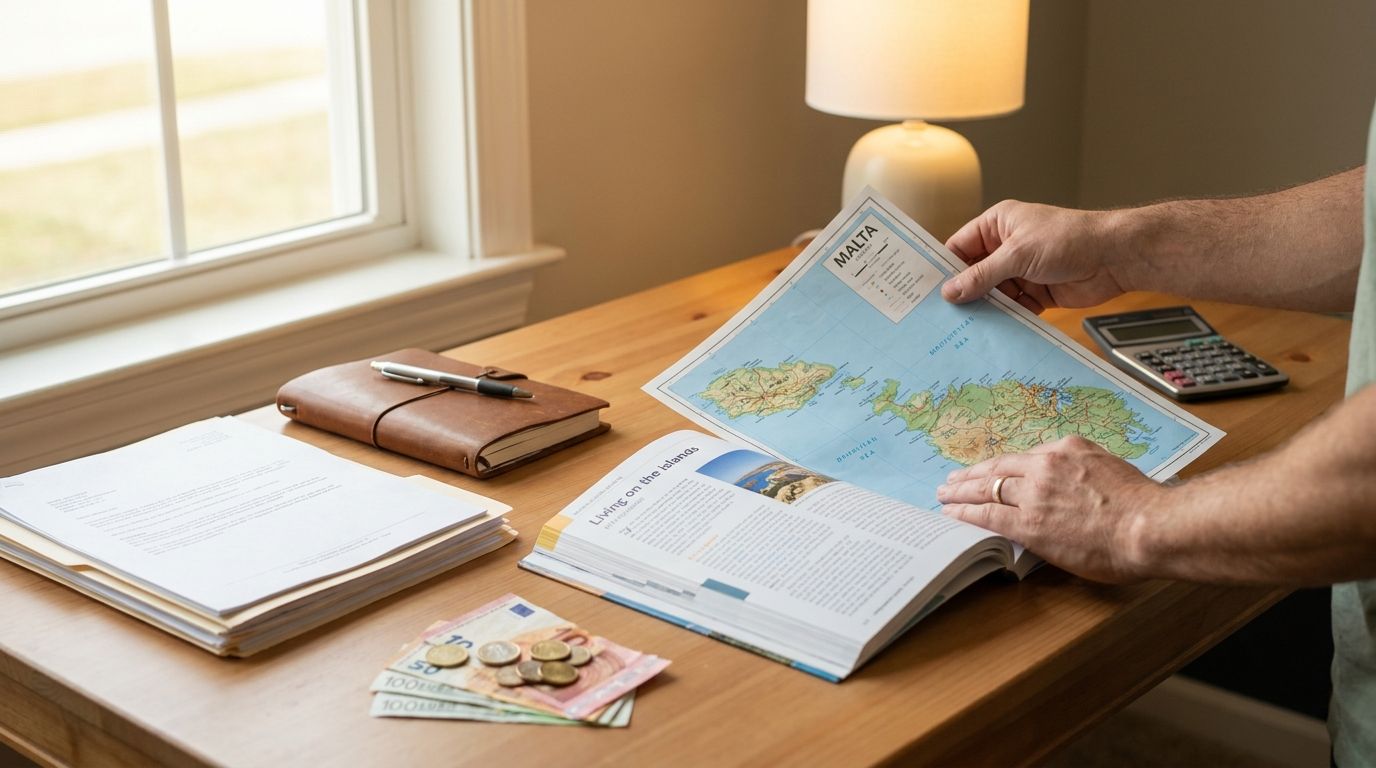
I Thought Moving Would Be Cheaper Then We Did the First Month Budget
The first month abroad humbled us fast. Here’s the real budget we lived, plus the takeaways that helped us breathe again.

You know that moment when you stare at a spreadsheet and it stares back? It was our kitchen table on a rainy Tuesday. Maya was wearing her "new country" sweatshirt, still excited, while my partner and I were doing that quiet math dance: rent, utilities, transport, groceries, and then the part we didn't want to name out loud, the line labeled "stuff we didn't plan for."
We'd moved thinking it would be cheaper. Friends had said it. Blogs had said it. Our brains had quietly converted "lower costs" into "lower life." Then the first month happened.
So here is what we actually spent, what surprised us, and how you can build your own first-month budget without letting it steal your joy.

The story: our "cheaper" idea broke on month one
We arrived with a plan that looked tidy on paper. Rent was lower than back home. Public transport looked affordable. We even found a grocery store with prices that made us do a little happy dance.
Then month one arrived like a cat that knocks everything off the counter. Not one huge disaster, but five small things that added up to a very loud total.
Here's the pattern that hit us:
- Costs that were "lower" still had to be paid every month, not just once.
- Things that were "optional" became necessary the moment we got tired.
- Our one-time move costs did not stop being one-time. They stretched.
We didn't just pay for living. We paid for setting up living.
What we thought we'd pay vs. what we paid
I'm not going to pretend we kept perfect categories. The first month was chaotic in the way that feels familiar to anyone who has moved, but we tracked enough to see the shape of reality.
We expected:
- Rent: lower than home
- Groceries: lower or similar
- Transport: cheaper
- Internet and phone: a manageable setup
- "Start-up" costs: a one-time spike
We experienced:
- Rent: lower, yes. But the move also came with deposits and admin fees we hadn't budgeted.
- Groceries: often cheaper, but we bought more "new to us" items at higher prices in the first weeks.
- Transport: public transit was reasonable. Then we added rides, taxis, and occasional car services because we were still learning routes and schedules.
- Internet and phone: the monthly bill was fine. The setup fees and the hours spent fixing things were not.
- Start-up costs: they spread out. We kept replacing essentials as we learned what we truly needed.
If you're reading this thinking, "That's exactly what happened to us," you're not bad at budgeting. You're doing real life. The first month is a transition month, not a steady-state month.
The first month has a "learning tax"
Learning tax is my term, and I'm saying it out loud because it helps. It's the money you spend while your brain is still figuring out how things work.
Learning tax shows up as:
- Paying for convenience because you don't know the local system yet
- Buying bigger quantities because you're afraid you'll run out
- Paying for services because you don't have local contacts yet
- Paying twice because you didn't realize one thing was already included
The frustrating part is that learning tax feels temporary. It also keeps returning in small doses.
Practical takeaway 1: Budget for setup and "replacement," not just rent
If you run your budget like a spreadsheet fantasy, month one will punish you. You want a budget that includes the stuff that happens when you live somewhere new, not just the recurring bills.
Here's a simple way to build a first-month budget that doesn't lie to you.
Create a two-layer budget: steady-state + transition
Layer 1 is your steady-state budget. Rent, utilities, groceries, basic transport, phone, internet. The kind of numbers you can estimate once you pick a neighborhood and a place to live.
Layer 2 is your transition budget. Everything you spend while you're setting up.
Use this checklist to build transition costs:
- Housing move-in costs: deposits, admin fees, initial cleaning fees
- Household setup: basic kitchen tools, bedding, towels, storage
- Tech setup: router fees, service activation, extra SIMs
- Paperwork and local admin: copies, translations, local registrations
- Transport learning: tickets you buy twice, taxis when you're lost
- "We need it now" purchases: medicine, toiletries, laundry supplies
Even if you think you won't need much, give yourself a transition buffer. In our case, the buffer didn't feel optional. It felt like oxygen.
How to estimate your transition buffer without overthinking
If you want a number, use this rule of thumb:
- Start with your first month rent.
- Add 10% to 25% of that rent as a transition buffer.
- Adjust based on how furnished the place is and how much you're bringing.
That range is wide on purpose. Furnished housing can reduce the household setup. Unfurnished housing can multiply it.
And if you're thinking, "What if we're wrong?" Good. You can be wrong in a controlled way. The goal is not perfect math. The goal is not getting blindsided.
Practical takeaway 2: Expect the "cheaper" categories to shift, not disappear
A lot of people talk about moving costs as if they are a single number. They aren't. Your costs shift.
We saw it clearly in three categories: groceries, transport, and eating out.
Groceries can be cheaper and still feel expensive
Groceries were cheaper in many places, but the first month didn't look like our grocery list back home. We bought:
- familiar brands that were pricier
- new brands we hadn't learned yet
- more snack foods because we were stressed
- extra ingredients because we were cooking our way through homesickness
So yes, groceries per item might be lower. Your grocery total can still rise because you're learning.
What helped was picking a "minimum viable grocery list." Not a perfect list, but a list that keeps you fed with fewer experiments.
Transport can be cheaper and still cost more during transition
Public transport was affordable once we understood it. But month one included:
- rides when we missed connections
- taxis when we were carrying bags
- short car hires when schedules didn't match our reality
You can plan for regular transport. You can't fully plan for learning routes while you're tired.
So we built a transport buffer we treated as a tuition fee. It made the budget feel honest.
Eating out is where "we'll save money" goes to hide
Eating out often costs more than you expect, but the bigger issue is frequency.
In month one, we ate out because:
- kitchens weren't fully set up
- cooking felt slower than it should
- we wanted comfort, not logistics
That's human. You're not failing. You're adapting.
If you want a practical move, set a cap for eating out for the first two to four weeks. Not forever, just long enough to stabilize.
Practical takeaway 3: Track "small leaks" for 14 days, then stop guessing
After the first month, we did a reset. We stopped trying to remember what we spent and started capturing it, not forever, just long enough to learn.
Do a 14-day leak audit
For two weeks, track spending daily. Write it down in whatever tool you already use; the point is not the tool. The point is to see patterns.
Then sort your spending into three buckets:
- Must-pay bills (rent, utilities, subscriptions)
- Home setup and replacements (household, cleaning, tools)
- "Comfort and convenience" (coffee, deliveries, taxis, extra shopping)
This is where you'll learn what you actually need to cut. Not what you think you should cut.
We found our biggest leak was convenience spending on the days we felt behind. When we felt caught up, the spending dropped.
That's a weird thing to admit, but it was true.
Use one category you can control: convenience
If you can only control one bucket, control convenience.
Pick a cap you can live with. For example:
- One delivery per week
- One taxi per week (or a set dollar amount)
- No "extra grocery runs" without a list
You're not punishing yourself. You're giving yourself guardrails while you learn the system.
Practical takeaway 4: Ask "what did we replace?" not "what did we buy?"
This one sounds small. It changed our budgeting.
When we moved, we didn't just buy new items. We replaced routines.
Back home, we had:
- familiar stores
- familiar brands
- familiar delivery habits
- familiar repair options
Abroad, those routines didn't exist yet. So we replaced them with whatever was available fast.
That's why "start-up costs" stretched. We were replacing systems, not just buying objects.
A replacement mindset reduces guilt
If your budget is higher than you expected, it can feel personal, like you did something wrong.
You didn't. You replaced a life.
A replacement mindset turns guilt into planning. It becomes: "Okay, what routines are we still rebuilding?" Then you can decide what to rebuild slowly and what to rebuild quickly.
A reality check: your first month budget might not match your long-term plan
Here's the part I wish someone had said to us earlier: your first month abroad is not a fair test of affordability.
It includes:
- move-in costs
- learning tax
- replacement of routines
- emotional spending that feels like relief
It also includes the fact that you might still be paying for a few home-country loose ends, like:
- storage
- memberships you forgot to cancel
- family travel costs
- shipping and returns
So when people say, "We moved and it was cheaper," they're probably talking about month six, not month one.
That doesn't make them wrong. It makes them different.
What you should measure instead
If you want a more accurate picture, measure:
- month three vs. month one
- month three vs. your target steady-state budget
- your spending after you stop making "new place" decisions
Month one is chaotic by design. Month three is where you can start trusting your numbers.
How SafeHavenGuide helps you avoid the spreadsheet heartbreak
With SafeHavenGuide's adaptive learning system, you can build a budget that includes both recurring costs and the setup phase you're actually living through. You enter your destination and your housing situation, and you get a clearer view of what tends to hit early.
No one wants to discover hidden costs after the move. But you can plan for the transition without turning your life into a finance exam.
If you're already budgeting, this is a chance to refine it with what you learned instead of what you hoped.
And yes, you can still be excited. Just make room for reality.
FAQ
Why did our first month cost more even though rent is cheaper?
Rent can be cheaper and you can still pay more overall because month one includes deposits, admin fees, and setup costs. It also includes learning tax, like transport mistakes and convenience spending while you figure out routines.
How much should we budget for move-in and setup costs?
A practical starting point is 10% to 25% of your first month rent for transition costs. If your housing is unfurnished or you're bringing fewer essentials, lean toward the higher end.
Should we cut eating out right away?
You don't have to cut it forever. Set a cap for the first two to four weeks so your budget stabilizes while you're still setting up kitchens and routines.
When will our budget start feeling accurate?
Month three is usually the first time the numbers look like your real life. Month one is transition. Month two is still catching up.
Closing: you're not failing, you're adapting
The rainy Tuesday kitchen table is still vivid for me. Maya was excited. We were tired. And the budget was doing that rude thing budgets do when they expose wishful thinking.
But there was also relief in seeing the truth. Once we knew what we were actually paying, we could make choices that matched our life instead of our assumptions.
If your first month budget surprised you, that doesn't mean you made a bad move. It means you moved into a new system.
Take a breath. Track your spending for 14 days. Build a transition buffer next time. Then adjust your plan with the data you earned, not the expectations you inherited.
You're not behind. You're in the learning part.
Join the conversation
Subscribe to comment
Join SafeHavenGuide's newsletter to leave a comment and get new posts in your inbox.