How to choose a country to move to with SafeHavenGuide's lifestyle fit comparison
A country can look perfect on paper and still feel wrong on an ordinary Tuesday. Learn how to compare countries by the life you actually want to live.

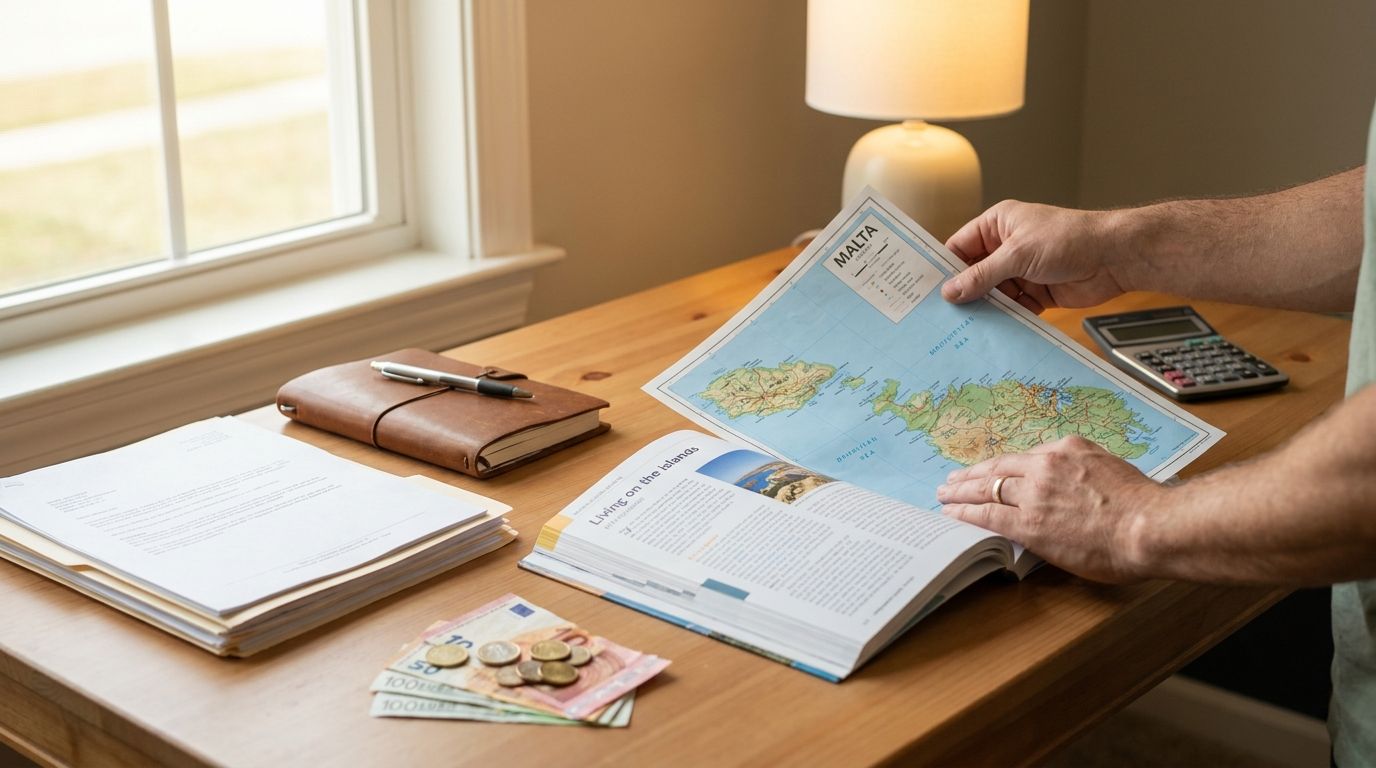
Maya Camp had four tabs open at her kitchen table: a visa page, a rental listing, a spreadsheet, and a photo of a sunny street she had never visited. Her coffee had gone cold. Again. She was trying to answer one question: how to choose a country to move to without mistaking a pleasant holiday for a workable life.
The best country to relocate to from the US is not the same for everyone. SafeHavenGuide helps you compare countries by lifestyle fit, monthly cost, household needs, safety preferences, and visa options so your shortlist reflects your real life rather than internet excitement.
That distinction matters because relocation decisions are rarely about a country in isolation. They're about your Tuesday morning, your rent payment, your healthcare plan, your work schedule, your parents, your pets, and the number of stairs you are willing to climb while carrying groceries.

Start with the life you want to repeat
People often begin with a country name. They see a video about Portugal, a post about France, or a thread about life in Mexico, then try to make their own plans fit the picture. That is understandable. A beautiful image is a much easier place to begin than a blank page.
But the better question is not, "Which country looks appealing?" It is, "What do I want an ordinary week to feel like?"
Maybe you want to walk to a bakery, take public transit, and spend less time behind the wheel. Maybe you need a larger home, reliable internet, English-language schooling, and a short route back to the United States. Maybe you want a slower pace, but not so slow that every appointment requires a three-week wait and a personal favor.
Your answer can be practical and emotional at the same time. A move has to work in your budget, but it also has to leave room for the version of you who wakes up on a rainy Wednesday and wonders what happened to the life you pictured.
SafeHavenGuide's lifestyle fit comparison starts with your household rather than a popular destination. The free quiz asks six questions, then returns three countries that fit your answers best, along with a cost figure. You do not need to create an account to take it at /preview.
Use the questions as a prompt, not a verdict. Notice which answers feel easy and which ones make you pause. That hesitation can point to a need you have not yet put into words.
Try writing down these details before you compare countries:
- Your preferred monthly spending limit, including rent and routine healthcare
- The kind of home and neighborhood you can manage comfortably
- Your need for a car, transit, walkability, or access to an airport
- Your tolerance for heat, cold, crowds, language barriers, and distance from family
A country comparison becomes more useful when your preferences have edges. "I want a good quality of life" is honest, but it does not help much until you define what quality means in your home, schedule, and bank account.
Compare real fit, not just attractive features
A relocation country comparison tool should help you see tradeoffs. Every country has them. Lower rent may come with fewer direct flights. A strong visa route may require more paperwork. A walkable city may mean smaller homes and higher housing costs. The point is not to find a place with no drawbacks. The point is to find drawbacks you can live with.
SafeHavenGuide's full ranked shortlist compares all 66 countries against your budget, family situation, safety preferences, and visa fit. The ranking gives you a place to begin, but the useful part is the reasoning underneath it.
When you review a country, ask what the result is responding to. A country may rank well because it fits your monthly budget, offers a realistic residency route, or matches your preference for urban living. Another may rank lower because rent exceeds your limit, even if the culture and climate feel right to you, and that gap between "feels right" and "works financially" is exactly where people get into trouble.
That difference can save you weeks of scattered research. It can also save you from falling in love with a place that only works if you ignore the expensive part.
A useful comparison usually includes:
- Monthly housing, food, transit, healthcare, and household costs
- Visa or residency routes that match your income, age, work, or family situation
- Safety information at the country and city level
- Housing options, transportation, healthcare access, and distance from airports
- Planning needs such as pet rules, flights, paperwork, and move deadlines
The cost figure is not meant to predict every euro or dollar you will spend. It gives you a working starting point based on your household profile. You can then test the result against actual rental listings, insurance quotes, school costs, and the habits you do not want to give up.
Someone who spends most of the year working from home may care more about internet reliability and a quiet apartment than about nightlife. A retiree may care more about healthcare access, walkable errands, and predictable housing costs. A family may accept a longer visa process if the school and home setup are a better match.
The same country can be a strong fit for one household and a poor fit for another. That is not a contradiction. It is the whole point of comparing by fit.
Use the comparison to have better conversations
Relocation is often a shared decision, even when one person is doing most of the research. Couples can want the same move for different reasons. One person may be seeking safety and routine. The other may be imagining a creative reset, warmer weather, or a lower monthly burn rate.
Those hopes deserve space. So do the worries.
A country ranking gives you something concrete to discuss instead of circling the same broad question over dinner. You can compare two countries against the same household details and ask where the differences actually show up in daily life.
Try this conversation format:
- Each person names one part of the current life they want to keep
- Each person names one part of the move that worries them
- You compare the same cost and visa information for both countries
- You choose one question to research before making a final judgment
This works for families, too. You do not need to make a child responsible for the decision, but you can pay attention to the routines that affect everyone. A long commute, a small bedroom, limited medical access, or missing language support at school can change how a move feels after the excitement fades.
You may also discover that your shortlist needs separate scenarios. A couple might compare one plan based on remote work and another based on retirement income. A family might compare a city apartment with a smaller-town rental. A pet owner might need to check import rules and veterinary access before looking at beaches or restaurants.
SafeHavenGuide lets you save and compare different household scenarios. That means you do not have to pretend your plans are settled when they are not. You can ask, "What happens if our budget changes?" or "What if we want to live near an airport?" and see how those changes affect your results.
There is relief in that. You are allowed to be undecided while you gather better information.
Turn a shortlist into a move you can test
A shortlist is not a promise to move. It is a smaller, calmer set of questions.
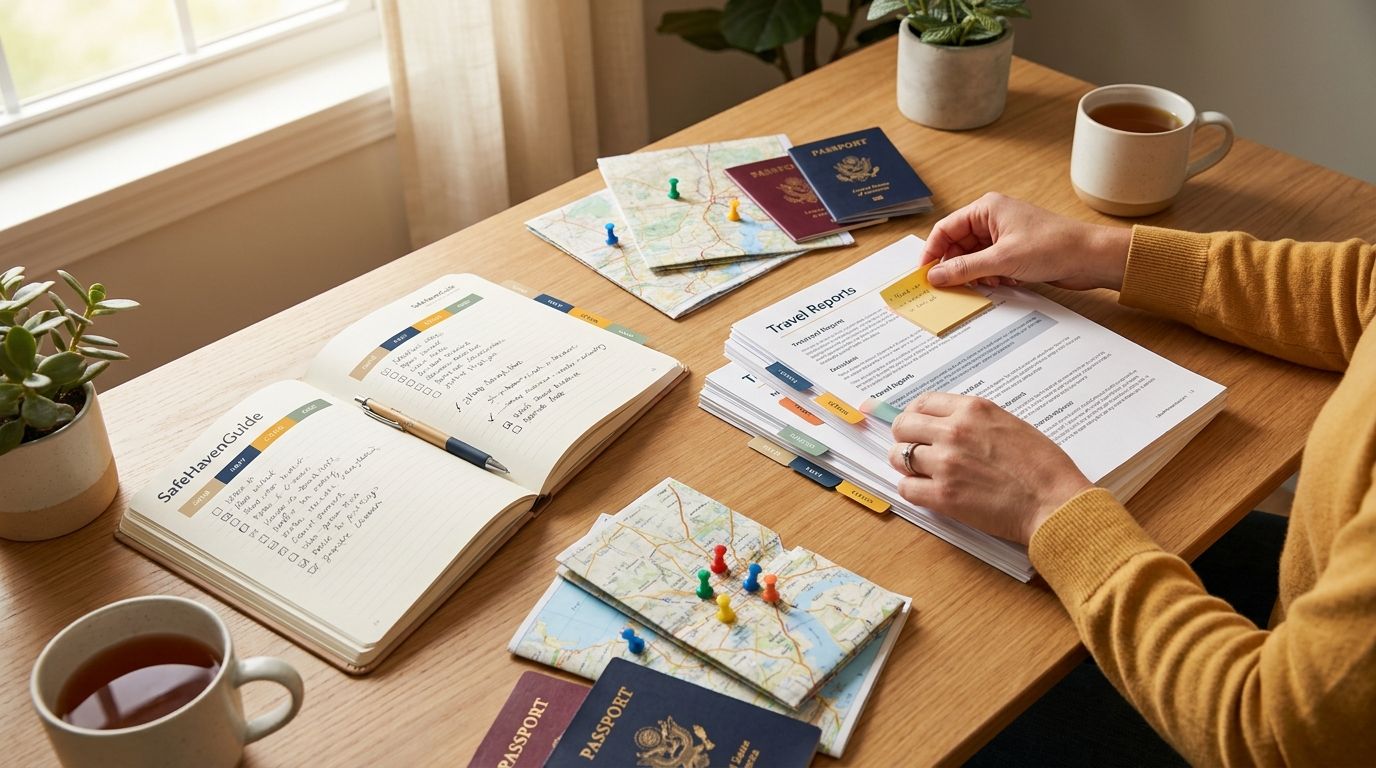
Once you have three or four possible countries, give each one a practical test. Read the country report. Check neighborhoods instead of only national averages. Look at rental listings on an ordinary weekday. Search for the nearest clinic, grocery store, train station, and airport. Notice how long it takes to complete a task that matters to you.
Download the free country pack at /free/{country} for a starting set of information. Then use the deeper country pages to explore local details when you are ready for more than a headline.
Your research can follow this order:
- Check whether the visa or residency path fits your income, work, age, and household
- Build a monthly budget using the type of home and neighborhood you would actually choose
- Review healthcare, safety, transportation, and housing information together
- Write down the documents, deadlines, and decisions required for a realistic move
The move plan checklist can help turn a vague intention into tasks with real deadlines. Visa guidance explains routes and requirements by country. Housing guidance helps you think through rental costs and options. Flight and pet relocation guidance can keep the logistical details from appearing at the worst possible moment, which is usually when you have already packed three boxes and misplaced your passport.
Do not wait until you feel completely certain. Certainty tends to arrive late, after the practical work has made the decision feel less mysterious. You can take a research trip, join a country community room when one opens, or compare a new scenario before committing to an application.
You can also run a small experiment at home. For one week, live as if you had already moved. Cook within the likely food budget. Use public transit if that is part of the plan. Work from a smaller space. Track the habits you miss and the habits you do not miss at all.
The experiment will not recreate another country. But it can reveal whether your idea of daily life has enough detail to survive contact with a grocery list.
What lifestyle fit can tell you about your decision
Lifestyle fit is not a score that decides your future. It is a way to put your priorities beside the practical facts.
You may learn that the country you expected to choose does not fit your housing budget. You may find that a less famous option gives you better access to healthcare and a more manageable visa route. You may discover that distance from family matters more than climate, or that a quiet neighborhood matters more than a low restaurant bill.
Those discoveries are progress. They do not mean you failed at dreaming.
The best country for your move is the one that supports the life you can actually maintain. That includes the unglamorous parts: renewing documents, getting prescriptions, paying utilities, finding a dentist, managing a rainy commute, and figuring out what to do when your first apartment is not quite right.
Start with the free six-question quiz. Save the three results. Then write one sentence about what each country would make easier and one sentence about what it would make harder.
That small exercise can shift the research from "Where should I go?" to "Which tradeoffs can I accept?" A better question will not remove every hard choice, but it will help you make the next one with more confidence and less noise.
You do not have to have the whole move figured out today. You only need a fair way to compare the life you want with the life each country can actually support.
FAQ
How do I choose a country to move to from the US?
Start by defining your household budget, visa needs, housing preferences, healthcare expectations, and daily routine. Then compare countries using the same information so you can see tradeoffs instead of relying on travel impressions or online rankings.
What is the best country to relocate to from the US?
There is no single best country for every American household. The right choice depends on your income, family needs, safety preferences, healthcare plans, desired routine, and available visa routes.
What does SafeHavenGuide compare between countries?
SafeHavenGuide compares country fit using your budget, family situation, safety preferences, and visa fit. It also provides country costs, housing information, visa guidance, move planning, flight planning, and pet relocation information.
Can I compare countries if my relocation plans are not final?
Yes. You can test different household scenarios, save comparisons, and change assumptions such as budget, household size, or preferred lifestyle. You are allowed to research before every detail is settled, and that is often the sensible way to begin.
Join the conversation
Subscribe to comment
Join SafeHavenGuide's newsletter to leave a comment and get new posts in your inbox.